Compactor Maintenance for Construction Season: Complete Service Guide for Wacker Plates
Published by Get Her Going Technical Team on 3rd Mar 2026
Compactor Maintenance for Construction Season: Complete Service Guide for Wacker Plates
Last Updated: March 2026 | Reading Time: 12 minutes
Quick Answer: 7 Essential Checks Before Construction Season
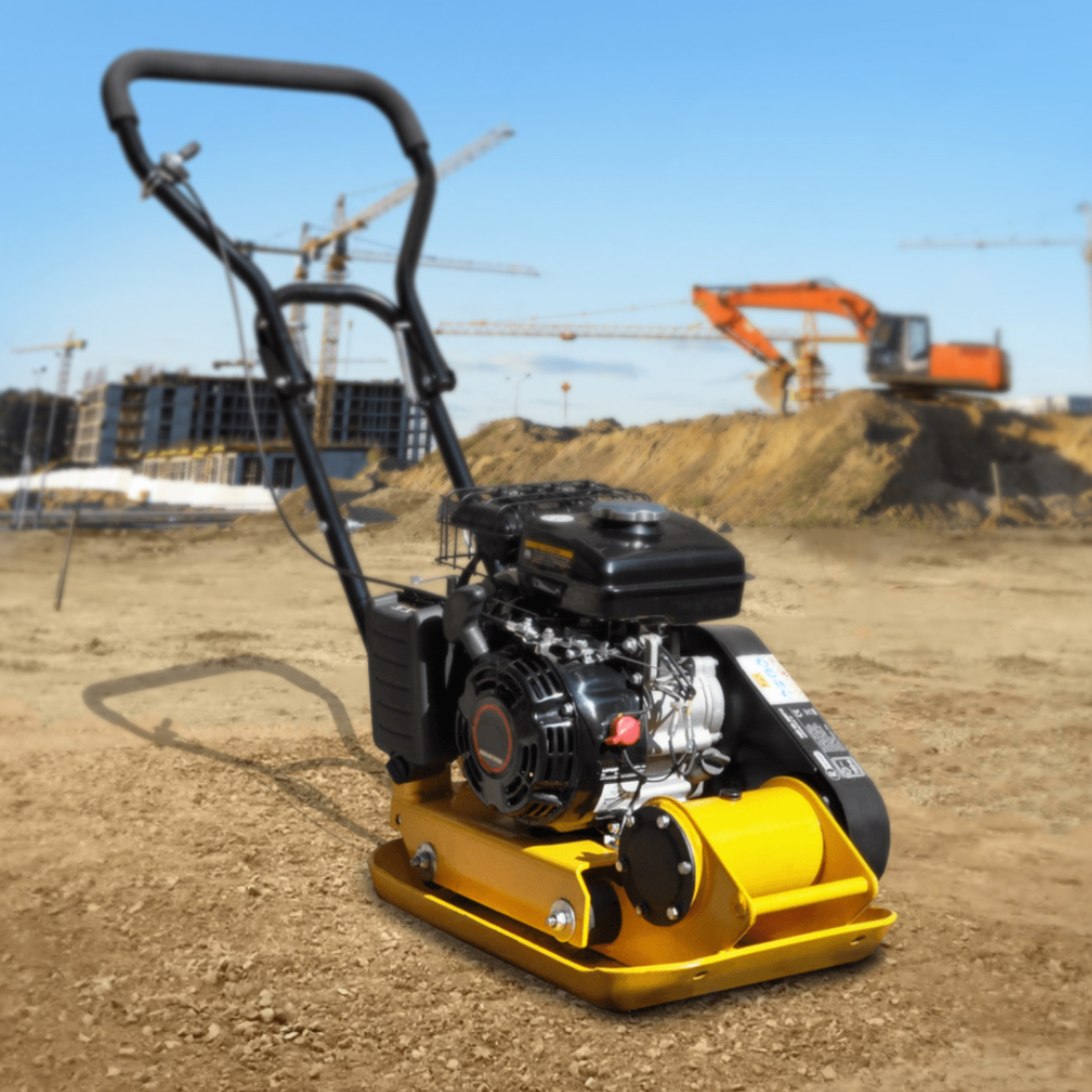
Construction and paving season is starting. Before you compact your first driveway, path, or foundation, your wacker plate (plate compactor) needs these critical maintenance checks:
- Check engine oil level — top up or change if dirty (prevents engine seizure)
- Replace old fuel — drain stale fuel, add fresh fuel with stabilizer
- Inspect vibration belt — check for cracks, glazing, or wear (most common failure)
- Check base plate condition — look for cracks, wear, or damage
- Test vibration system — bearings must spin freely, no seized components
- Clean or replace air filter — dusty construction work clogs filters quickly
- Inspect throttle and clutch cables — must operate smoothly for safety
These seven steps prevent the most common compactor failures and ensure reliable compaction all construction season.
Average maintenance time: 45 minutes
Parts cost (if needed): £40-100 / $50-125 / €45-115 / C$68-170
See Compactor Engine parts here.
Why Compactor Maintenance Matters Before Construction Season
What happens to compactors during winter storage:
- Fuel degrades and clogs carburetor jets (after 30-60 days)
- Vibration belt becomes brittle from cold temperatures
- Base plate develops surface rust and minor cracks
- Eccentric bearings seize from lack of lubrication
- Engine oil breaks down and loses protective properties
- Dust and concrete residue hardens on moving parts
- Throttle cables seize from moisture and lack of use
The cost of skipping maintenance:
- New base plate: £120-350 / $150-440 / €140-410 / C$204-595 (vs inspection £0)
- Vibration belt replacement: £25-65 / $32-82 / €29-76 / C$43-110 (vs check £0)
- Eccentric bearing replacement: £40-120 / $50-150 / €45-140 / C$68-204 (vs lubrication £8 / $10 / €9 / C$13)
- Carburetor rebuild: £60-120 / $75-150 / €70-140 / C$100-204 (vs fresh fuel £8 / $10 / €9 / C$13)
- Lost site time: 3-7 days waiting for parts during critical paving jobs
Bottom line: Groundwork contractors and paving specialists know — compactor downtime stops entire projects. 45 minutes of maintenance prevents job delays.
When to Service Your Compactor for Construction Season
Regional Construction Season Timing:
UK & Northern Europe:
- Service: Late March to mid-April 2026
- Construction season: April-October
- Peak demand: May-September (dry weather)
Southern Europe:
- Service: February-March 2026
- Construction season: March-November
- Extended season with earlier start
US & Canada (varies by region):
- Northern states/provinces: Service April 2026
- Southern states: Service March 2026 (year-round in some areas)
- Midwest: Service late April 2026
Australia:
- Service: August-September 2026 (opposite seasons)
- Construction season: September-April
Key indicator: Service compactor 2-4 weeks before first scheduled paving/groundwork jobs
Spring Compactor Maintenance Checklist
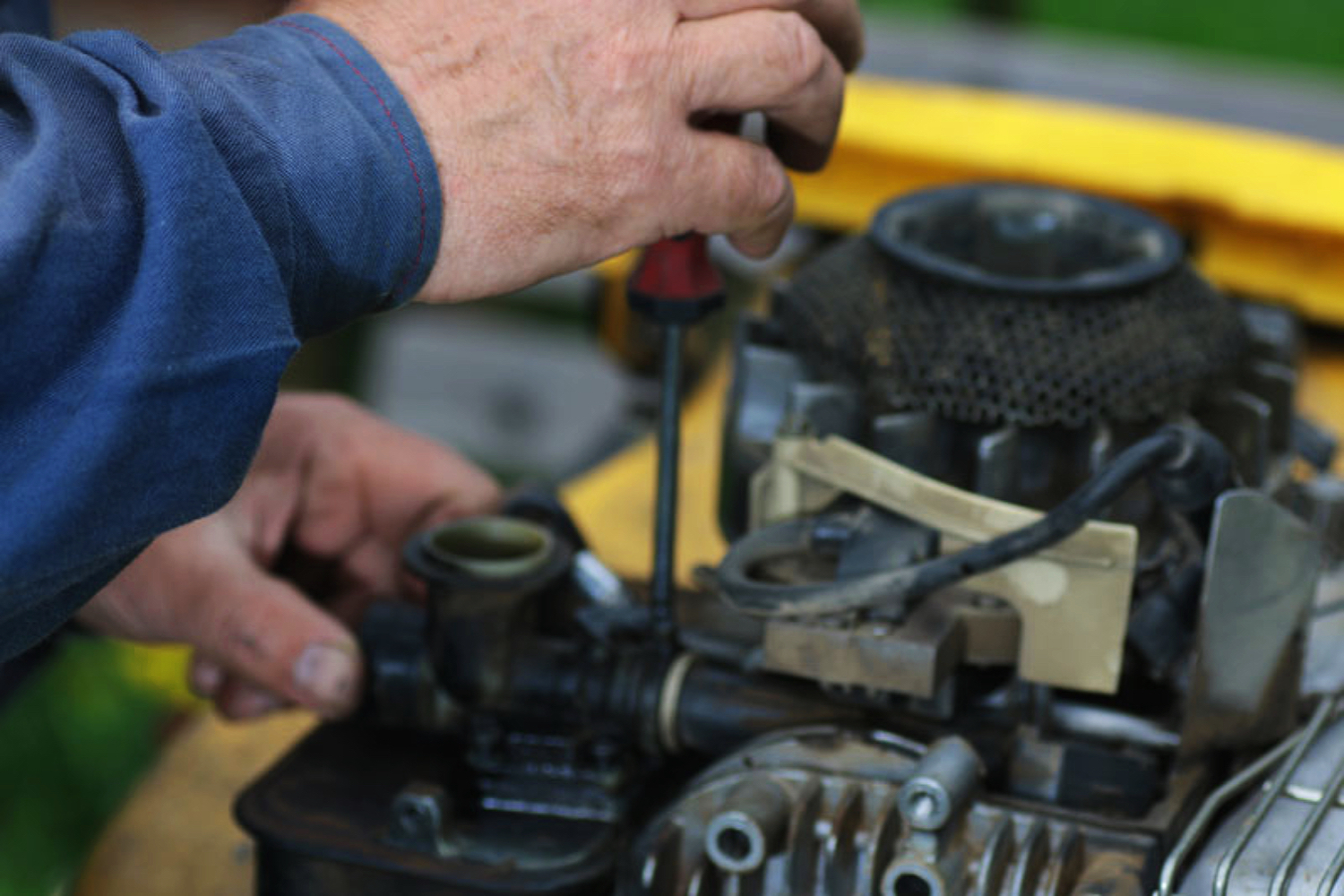
Step 1: Visual Inspection (5 minutes)
Before starting the engine, inspect the entire machine:
Base Plate Inspection:
- ✅ Check for cracks in plate (especially near mounting points)
- ✅ Look for excessive wear on bottom surface
- ✅ Inspect plate mounting bolts tight
- ✅ Check rubber mat (if fitted) for damage or detachment
- ✅ Look for warping or bending of plate
Frame & Handle:
- ✅ Frame welds intact, no cracks
- ✅ Handle mounting bolts tight
- ✅ Lifting handle secure
- ✅ Handle height adjustment works
- ✅ All guards and covers present
Vibration System:
- ✅ Vibration belt visible through inspection window (if fitted)
- ✅ Belt guard secure and undamaged
- ✅ Eccentric housing not leaking oil
- ✅ No visible damage to eccentric shaft
- ✅ Pulley alignment correct
Engine Exterior:
- ✅ Fuel tank cap seals properly
- ✅ No fuel leaks visible
- ✅ Air filter housing intact
- ✅ Exhaust/muffler secure
- ✅ Throttle cable moves freely
Red flags requiring immediate attention:
- Cracked base plate (dangerous — can break during operation)
- Missing belt guard (serious safety hazard)
- Fuel leaking from carburetor (fire risk)
- Cracked frame welds (structural failure risk)
- Severely worn belt (will break under load)
Step 2: Engine Oil Check and Change (10 minutes)
Compactor engines work hard under high vibration loads.
How to check engine oil:
- Place compactor on level ground
- Remove oil dipstick/filler cap
- Wipe dipstick clean
- Reinsert fully without screwing in (or screw in depending on type)
- Remove and check level
What to look for:
- Low oil: Top up immediately (vibration increases oil consumption)
- Very dark/black oil: Normal after use, change if over 6 months old
- Milky oil: Water/moisture contamination (investigate cause)
- Gritty oil: Metal particles from wear (concerning — inspect engine)
Recommended oil for compactors:
Spring/Summer (April-September):
- SAE 30 for temperatures above 5°C / 41°F
- 10W-30 for variable spring weather
- 15W-40 for hot summer operation (heavy-duty)
Important: Compactors operate in dusty conditions with high vibration — check oil level frequently (every 5-10 hours)
Oil change procedure:
- Run engine 2-3 minutes to warm oil
- Turn engine OFF
- Place drain pan under engine
- Remove drain plug (typically 17mm)
- Drain completely (vibration may have suspended sediment)
- Replace drain plug with new washer if available
- Refill with correct grade and amount (check manual — typically 0.5-0.6L)
- Check level with dipstick
- Dispose of old oil properly
Oil change interval: Every 50 hours OR at start of season (whichever first)
Step 3: Fuel System Service (10 minutes)
Old fuel causes most compactor no-start problems.
Why fuel service is critical:
- Compactors often sit idle between jobs (fuel degrades)
- Ethanol fuel absorbs moisture (causes corrosion)
- Carburetor jets are tiny (easily clogged)
- Vibration can loosen fuel system components
Fuel system service procedure:
If fuel is 3+ months old (always at season start):
- Turn fuel tap to OFF position
- Disconnect fuel line from carburetor
- Drain into approved container
- Inspect inside fuel tank for rust/debris
- If dirty: remove tank, flush with fresh fuel, dry thoroughly
- Reconnect fuel line
- Fill with fresh fuel
- Add fuel stabilizer (extends life 12-24 months)
- Turn fuel tap ON
Fuel filter check:
- Many compactors have inline fuel filter
- Replace if discolored or over 1 year old
- Cost: £5-10 / $6-13 / €6-12 / C$9-17
Carburetor service (if engine won't start):
Symptoms of dirty carburetor:
- Engine cranks but won't fire
- Starts briefly then dies
- Runs only with choke fully closed
- Rough idle, surging
- Black smoke (running too rich)
Quick cleaning method:
- Remove air filter
- Spray carburetor cleaner directly into air intake
- Let penetrate 10-15 minutes
- Reinstall air filter
- Attempt to start
If cleaning doesn't work: Full carburetor rebuild needed (remove, disassemble, clean all jets, reassemble)
Compactor carburetors in stock →
Step 4: Air Filter Service (5 minutes)
Critical for compactors — they operate in extremely dusty environments.
Why air filters fail quickly on compactors:
- Concrete dust is very fine (clogs filters fast)
- Sand and soil particles abundant on construction sites
- Long operating hours in dusty conditions
- Filter directly affects engine power and longevity
How to service air filter:
Foam filters (most common on compactors):
- Remove air filter cover (usually wing nut or clips)
- Remove foam element
- Inspect for tears, degradation, or hardening
- Wash in warm soapy water (washing up liquid works)
- Rinse thoroughly until water runs clear
- Squeeze dry (don't wring or twist)
- Apply foam filter oil or SAE 30 engine oil
- Squeeze to distribute oil evenly throughout foam
- Foam should be damp with oil, not dripping
- Reinstall when properly oiled
Paper filters (some models):
- Remove from housing
- Tap gently to dislodge loose dust
- Do NOT blow with compressed air (damages filter media on compactor filters)
- Hold to light — should see light through
- If very dirty: replace (£10-18 / $13-23 / €12-21 / C$17-31)
- If oil-soaked or torn: replace immediately
Dual element filters:
- Service both foam pre-filter (wash) and paper main filter (inspect/replace)
- Never run without both elements installed
Maintenance interval:
- Check: Every 5 hours in dusty conditions
- Clean: Every 10-25 hours (depends on dust level)
- Replace paper elements: Every 50 hours or annually
- Replace foam elements: When degraded, torn, or hardened
Compactor air filters available →
Step 5: Spark Plug Check (5 minutes)
Reliable ignition is essential for compactors.
How to inspect spark plug:
- Disconnect spark plug lead (pull boot, not wire)
- Clean around plug (prevents dirt entering cylinder)
- Use spark plug wrench (usually 16mm or 21mm)
- Remove plug carefully
- Inspect electrode and insulator
Spark plug condition guide:
GOOD condition:
- Light tan/grey deposits
- Minimal electrode wear
- Clean ceramic insulator
- Gap 0.6-0.8mm / 0.024-0.031"
REPLACE if:
- Black/sooty: Rich fuel mixture or oil consumption (replace plug, check carburetor)
- Wet with fuel: Flooded engine or fuel system issue (dry plug, check carburetor)
- White/blistered: Engine running too hot (replace, investigate cooling)
- Oily: Worn piston rings (replace plug, monitor oil consumption)
- Eroded electrode: Normal wear after 100+ hours (replace)
- Cracked insulator: Failed insulation (replace immediately)
Spark test procedure:
- Reconnect spark plug lead to removed plug
- Hold threaded part against engine block (grounded)
- Pull starter cord briskly
- Should see bright blue spark at electrode
- Weak orange spark or no spark: Replace plug, check ignition coil if problem persists
Replacement interval: Every 100 hours or annually
Cost: £5-12 / $6-15 / €6-14 / C$9-20
Compactor spark plugs in stock →
Step 6: Vibration Belt Inspection (10 minutes)
THE MOST CRITICAL CHECK — without vibration, a compactor is useless.
How the vibration system works:
- Engine pulley drives vibration belt
- Belt turns eccentric weight inside base plate
- Eccentric weight spinning creates up-down vibration
- Vibration compacts soil/aggregate beneath plate
- Belt clutch (on some models) engages/disengages vibration
Vibration belt inspection procedure:
Access the belt:
- Remove belt guard (usually 2-4 bolts)
- Visually inspect entire belt length
- Manually rotate belt to see all sides
What to check:
- ✅ Cracks on inside surface (belt will fail soon)
- ✅ Glazed/shiny surface (belt is slipping)
- ✅ Frayed edges (misalignment or worn pulleys)
- ✅ Missing chunks/pieces (replace immediately)
- ✅ Oil contamination (belt will slip, find oil leak)
- ✅ Excessive wear on sides (pulley misalignment)
Belt tension check:
- Press belt midpoint between pulleys with finger
- Should deflect 10-15mm / 0.4-0.6"
- Too loose: slips and doesn't vibrate properly
- Too tight: premature bearing wear
Adjusting belt tension:
Method varies by model:
Type 1 (idler pulley):
- Loosen idler pulley mounting bolt
- Move idler to increase/decrease tension
- Re-tighten bolt when correct
Type 2 (engine position):
- Loosen engine mounting bolts
- Slide engine to adjust belt tension
- Re-tighten mounting bolts
Type 3 (fixed — non-adjustable):
- Belt replacement only option when worn
When to replace vibration belt:
- Any visible cracks
- Glazed/slipping
- Frayed edges
- Oil contamination
- Over 2-3 years old (even if looks OK)
- Compactor won't vibrate or vibrates weakly
Belt replacement cost: £25-65 / $32-82 / €29-76 / C$43-110
Important: Always replace with correct belt for your compactor model — wrong belt causes vibration problems
Compactor vibration belts in stock →
Step 7: Base Plate Inspection (8 minutes)
The base plate takes constant hammering — check for damage.
What to inspect:
Plate bottom surface:
- ✅ Wear depth (measure thickness if possible)
- ✅ Deep grooves or channels worn in plate
- ✅ Uneven wear patterns
- ✅ Cracks starting from edges
- ✅ Warping or bending
Plate mounting:
- ✅ Mounting bolts to eccentric housing tight
- ✅ No cracks around bolt holes
- ✅ Rubber isolators (if fitted) not degraded
- ✅ Plate sits level on ground
Rubber mat (if fitted):
- ✅ Securely attached to plate
- ✅ Not torn or peeling away
- ✅ Adequate thickness remaining
- ✅ Used for asphalt work (prevents sticking and marking)
Plate wear measurement:
New plate: Typically 10-12mm thick
Replace when: Worn to 6-7mm (50% wear)
Severe wear: Under 6mm (risk of cracking)
Why worn plates are dangerous:
- Thin plates can crack during operation
- Pieces can fly off (injury risk)
- Vibration becomes erratic
- Compaction effectiveness reduced
Plate replacement cost: £120-350 / $150-440 / €140-410 / C$204-595 depending on compactor size
Compactor base plates available →
Step 8: Eccentric Bearing Check (5 minutes)
Bearings support the rotating eccentric weight.
How to check eccentric bearings:
On most compactors:
- Remove belt guard
- Remove vibration belt
- Rotate eccentric shaft by hand
- Should spin freely with minimal resistance
- No grinding, catching, or roughness
Warning signs of bearing failure:
- Grinding noise when rotating by hand
- Excessive play (shaft wobbles side-to-side)
- Shaft doesn't spin freely (seized or very tight)
- Heat discoloration on eccentric housing
- Oil leaking from bearing seals
- Loud knocking during operation
Bearing lubrication:
Sealed bearings (most modern compactors):
- Pre-lubricated, no maintenance required
- Replace when they fail
Grease fittings (older models):
- Grease every 25-50 hours
- Use high-quality multi-purpose grease
- Pump until grease appears from seals
Bearing replacement cost: £40-120 / $50-150 / €45-140 / C$68-204 (including labor if DIY)
Important: Bad bearings cause belt wear, vibration problems, and eventual catastrophic failure
Step 9: Throttle & Clutch Cable Inspection (5 minutes)
Controls must work smoothly for safe operation.
Throttle cable check:
- Move throttle lever through full range
- Should move smoothly without sticking
- Engine RPM should respond immediately
- Returns to idle when released
- No fraying visible at cable ends
Clutch cable/lever (if fitted):
- Engage clutch lever (starts vibration)
- Should engage positively, not slip
- Release clutch — vibration stops immediately
- No excessive play in lever
- Cable not stretched or frayed
Cable maintenance:
If cables stick or move roughly:
- Disconnect cable at engine end
- Apply light penetrating oil into cable outer sheath
- Work cable back and forth to distribute oil
- Reconnect cable
- Test operation
If cables are frayed or kinked:
- Replace immediately (safety issue)
- Cost: £8-20 / $10-25 / €9-23 / C$13-34 per cable
Cable adjustment (if needed):
- Most have adjuster at handlebar end
- Loosen locknut, turn adjuster to increase/decrease cable tension
- Re-tighten locknut
Step 10: First Start Procedure (After Maintenance)
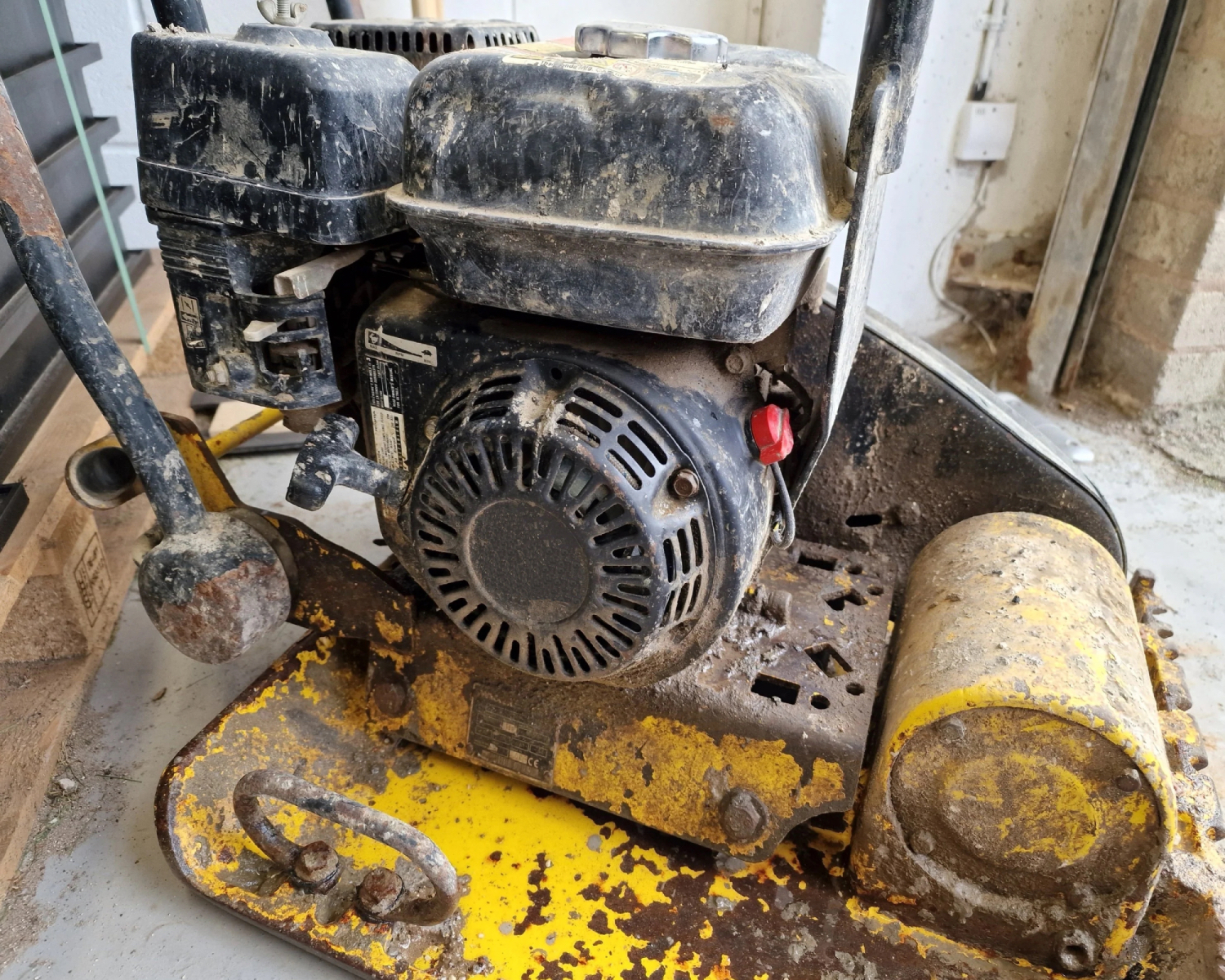
Safe startup sequence:
Pre-start checks:
- ✅ Engine oil at correct level
- ✅ Fresh fuel in tank
- ✅ Air filter clean and installed
- ✅ Spark plug tight and connected
- ✅ Vibration belt installed and tensioned
- ✅ Belt guard in place (safety requirement)
- ✅ Compactor on level ground
Starting procedure:
- Turn fuel tap ON
- Close choke (cold engine) or open (warm engine)
- Set throttle to START/IDLE position
- Ensure vibration clutch DISENGAGED (if fitted)
- Pull starter cord smoothly — don't yank
- Once started, gradually open choke as engine warms
- Let engine warm 2-3 minutes before engaging vibration
Test vibration system:
- With engine at idle, engage clutch (or increase throttle if centrifugal clutch)
- Compactor should vibrate smoothly and consistently
- Increase throttle to half speed
- Vibration should increase in intensity
- Compactor should "walk" forward slightly on loose ground
- Disengage clutch — vibration stops immediately
Troubleshooting first start:
Engine won't start:
- Verify fuel tap ON
- Check choke fully CLOSED (cold start)
- Check spark plug lead connected
- Ensure fresh fuel in tank
Engine starts then dies:
- Old fuel (drain and replace)
- Clogged carburetor (needs cleaning)
- Air filter completely blocked
No vibration when engaged:
- Belt broken or slipped off
- Belt too loose (slipping)
- Eccentric bearings seized
- Clutch not engaging
Vibration weak or erratic:
- Belt slipping (tension or oil contamination)
- Worn belt (replace)
- Damaged eccentric weight
- Bearing failure
Common Compactor Problems & Solutions
Problem 1: "Compactor won't vibrate"
Most common cause of compactor failures.
Diagnosis checklist:
1. Belt broken or missing (check first):
- Symptom: No vibration at all, engine runs normally
- Solution: Replace vibration belt
- Cost: £25-65 / $32-82 / €29-76 / C$43-110
- Drive belts →
2. Belt slipping (loose or contaminated):
- Symptom: Vibration starts then stops, or very weak vibration
- Check: Belt tension and condition, look for oil on belt
- Solution: Adjust tension or replace belt, fix oil leak
- Cost: £0 (adjustment), £25-65 / $32-82 / €29-76 / C$43-110 (belt)
3. Clutch not engaging:
- Symptom: Engine runs, belt turns slowly or not at all
- Check: Clutch cable adjustment, clutch mechanism
- Solution: Adjust cable or replace clutch parts
- Cost: £8-60 / $10-76 / €9-70 / C$13-102
4. Seized eccentric bearings:
- Symptom: Belt tries to turn but eccentric won't spin, or massive resistance
- Check: Remove belt, try rotating eccentric by hand
- Solution: Replace bearings
- Cost: £40-120 / $50-150 / €45-140 / C$68-204
Problem 2: "Compactor vibrates but very weakly"
Ineffective compaction — job won't pass density tests.
Common causes:
1. Worn or slipping belt:
- Check: Belt condition and tension
- Solution: Replace belt and adjust tension
- Cost: £25-65 / $32-82 / €29-76 / C$43-110
2. Engine not reaching full RPM:
- Check: Throttle cable adjustment, engine governor
- Solution: Adjust throttle or service carburetor
- Cost: £0-80 / $0-100 / €0-95 / C$0-136
3. Worn eccentric weight:
- Check: Eccentric weight for cracks or missing pieces
- Solution: Replace eccentric assembly
- Cost: £80-200 / $100-250 / €95-235 / C$136-340
4. Damaged base plate:
- Check: Cracks or severe warping in plate
- Solution: Replace base plate
- Cost: £120-350 / $150-440 / €140-410 / C$204-595
Problem 3: "Compactor vibrates excessively or erratically"
Dangerous — can damage handle and bearings.
Causes:
1. Unbalanced eccentric weight:
- Symptom: Violent shaking, changes in intensity
- Check: Eccentric weight for damage or missing pieces
- Solution: Replace eccentric assembly
- Cost: £80-200 / $100-250 / €95-235 / C$136-340
2. Worn eccentric bearings:
- Symptom: Grinding noise, excessive vibration through handle
- Check: Bearing condition (spin test)
- Solution: Replace bearings
- Cost: £40-120 / $50-150 / €45-140 / C$68-204
3. Loose base plate mounting:
- Symptom: Rattling, plate not secure
- Check: Plate mounting bolts
- Solution: Tighten bolts to proper torque
- Cost: £0
4. Cracked frame or welds:
- Symptom: Vibration through frame, visible movement
- Check: Frame welds and structure
- Solution: Professional welding repair or frame replacement
- Cost: £60-200 / $75-250 / €70-235 / C$100-340
Problem 4: "Engine runs but lacks power under load"
Compactor bogs down when vibration engaged.
Common causes:
1. Dirty air filter:
- Symptom: Engine struggles, black smoke, dies when loaded
- Solution: Clean or replace air filter
- Cost: £10-18 / $13-23 / €12-21 / C$17-31
2. Spark plug fouled:
- Symptom: Rough idle, misfiring, poor acceleration
- Solution: Clean or replace spark plug
- Cost: £5-12 / $6-15 / €6-14 / C$9-20
3. Carburetor needs adjustment:
- Symptom: Surging, can't maintain speed under load
- Solution: Adjust carburetor mixture screws or rebuild
- Cost: £0 (adjustment), £60-120 / $75-150 / €70-140 / C$100-204 (rebuild)
4. Worn drive belt (engine to vibration):
- Symptom: Belt slips when loaded
- Solution: Replace belt, adjust tension
- Cost: £25-65 / $32-82 / €29-76 / C$43-110
Compactor Parts to Stock for Construction Season
Essential spares for uninterrupted groundwork:
Engine Parts:
- ✅ Spark plug × 2 — £5-12 / $6-15 / €6-14 / C$9-20 each
- ✅ Air filter × 2 — £10-18 / $13-23 / €12-21 / C$17-31 each
- ✅ Fuel filter × 1 — £5-10 / $6-13 / €6-12 / C$9-17
- ✅ Recoil starter × 1 — £25-60 / $32-76 / €29-70 / C$43-102
Vibration System:
- ✅ Vibration belt × 2 (have spare on truck) — £25-65 / $32-82 / €29-76 / C$43-110 each
- ✅ Eccentric bearings × 1 set — £40-120 / $50-150 / €45-140 / C$68-204
- ✅ Belt guard bolts × set — £5-10 / $6-13 / €6-12 / C$9-17
Controls:
- ✅ Throttle cable × 1 — £8-20 / $10-25 / €9-23 / C$13-34
- ✅ Clutch cable × 1 (if fitted) — £8-20 / $10-25 / €9-23 / C$13-34
Consumables:
- ✅ Engine oil (SAE 30 or 10W-30) × 2L
- ✅ Multi-purpose grease × 1 tube
- ✅ Fuel stabilizer × 1 bottle
- ✅ Belt dressing spray (stops slipping temporarily) × 1 can
Total emergency kit: £135-315 / $170-395 / €160-370 / C$230-535
Cost of compactor downtime on site:
- Lost work time: 1-3 days waiting for parts
- Can't complete paving/groundwork (delays entire project)
- Hire company charges continue even with broken equipment
- Rush parts delivery: £15-40 / $19-51 / €18-47 / C$26-68
Regional Construction Season Tips
UK & Ireland
Peak season: May-September 2026
Challenges:
- Frequent rain interruptions (seal work in dry spells)
- Wet aggregate harder to compact
- Concrete dust in damp conditions clogs filters
Tips:
- Check weather forecast daily
- Stock extra air filters (wet dust clogs faster)
- Clean compactor daily in wet conditions
- Use water on dry concrete dust (improves compaction, reduces dust)
Common applications:
- Block paving driveways
- Patio sub-bases
- Trench backfill
- Road base preparation
Northern Europe (Netherlands, Germany, Scandinavia)
Peak season: April-October 2026
Challenges:
- Short season in northern regions
- Maximize productivity in dry weather
- Cold spring starts
Tips:
- Use 10W-30 oil for cold weather operation
- Service early (don't wait for peak season)
- Cover stored compactor (frequent rain)
Southern Europe (Spain, Italy, Greece)
Peak season: March-November 2026 (extended)
Challenges:
- Very hot summer operation (engine cooling critical)
- Dusty, dry conditions
- Extended season = more wear
Tips:
- Use 15W-40 oil for hot weather
- Check air filter daily (dust)
- Clean cooling fins weekly
- Shade engine during breaks
US & Canada
Northern states/provinces: May-September 2026
- Short season (every day counts)
- Cold spring weather (engine warm-up critical)
- Rush to complete projects before freeze
Southern states: March-November 2026
- Extended season
- High heat operation
- Year-round in warmest states
Midwest: May-October 2026
- Moderate season
- Variable weather
- Tornado season considerations (secure equipment)
Australia
Peak season: September-April 2026 (opposite seasons)
Challenges:
- Extreme heat operation
- Dust storms
- UV degradation of rubber components
Tips:
- Check oil level twice daily in heat
- Extra air filter changes
- Store in shade
- Use high-temperature oil
Frequently Asked Questions
Why won't my compactor vibrate even though the engine runs fine?
Most common cause is a broken or slipped vibration belt. Remove the belt guard and visually inspect the belt — if it's broken, frayed, or has slipped off the pulleys, it needs replacement. If belt looks OK, check tension (should deflect 10-15mm when pressed) and adjust if too loose. If belt and tension are good, check if eccentric bearings have seized by removing belt and trying to rotate eccentric by hand. Vibration belts available →
How often should I change compactor engine oil?
Every 50 hours of operation or at the start of each season, whichever comes first. Compactors operate under high vibration and dusty conditions, which contaminate oil faster than other equipment. Check oil level every 5-10 hours during operation and top up as needed — vibration can increase oil consumption. Always use SAE 30 for warm weather or 10W-30 for variable temperatures.
Can I use a compactor on wet ground?
Yes, but effectiveness is reduced. Compactors work best on slightly damp (not wet) soil or aggregate. Very wet ground won't compact properly — water prevents particles from locking together. Wait for surface water to drain. For trench backfill with wet conditions, compact in thin layers (100-150mm) rather than thick layers. Never use on saturated clay — you'll create a slippery mess, not compaction.
How do I know when my compactor base plate needs replacing?
Measure plate thickness — replace when worn to 50% of original thickness (typically 6-7mm remaining). Other warning signs: visible cracks starting from edges or bolt holes, severe warping, deep grooves worn across plate, or vibration becoming erratic. Worn plates can crack during operation and send pieces flying (dangerous). Don't wait until failure. Base plates available →
Why does my compactor vibrate excessively and feel out of control?
Common causes: 1) Worn or damaged eccentric bearings (creates unbalanced vibration). 2) Cracked or damaged eccentric weight. 3) Loose base plate mounting bolts. 4) Cracked frame welds. Excessive vibration damages equipment and is dangerous to operate. Stop using immediately and inspect eccentric system, base plate mounting, and frame. Continuing to operate with bad vibration causes expensive secondary damage.
What's the difference between compaction force and vibration frequency?
Compaction force (measured in kN or pounds): How much downward force the vibrating plate exerts on the ground. Larger plates = more force. Vibration frequency (vibrations per minute - VPM): How fast the plate vibrates up and down. Typical range: 4,000-6,000 VPM. Higher frequency = better for thin lifts and granular soils. Lower frequency with high force = better for deep compaction and cohesive soils. Match compactor to job requirements.
How many passes should I make with a compactor?
Depends on material and layer thickness: Granular materials (sand, gravel, crushed stone): 4-6 passes typically achieve 95% compaction in 150mm layers. Cohesive soils (clay, silt): 6-8+ passes needed, use thinner layers (100mm). Trench backfill: 6-8 passes per 150mm layer. Block paving base: 4-6 passes. Test: Walk on compacted area — if footprints are minimal, compaction is adequate. For critical work, use nuclear density gauge or plate load test.
Can I compact asphalt with a regular compactor?
Only with a rubber mat attached to the base plate. Bare steel plates stick to hot asphalt and leave marks. Rubber mats (also called paving pads) prevent sticking and provide smoother finish. Mats cost £40-80 / $50-100 / €45-95 / C$68-136 and attach with bolts. For large asphalt jobs, use a dedicated asphalt roller. Small repairs and edges: compactor with rubber mat works fine.
Why does my compactor "run away" and pull me forward?
Compactors naturally move forward due to vibration direction. The vibrating plate pushes backward against the ground, which propels the compactor forward. Control techniques: 1) Lower handle (reduces forward force). 2) Lift slightly on handle (increases friction, slows movement). 3) Reduce engine speed (less vibration intensity). 4) Walk slowly and let machine set pace. 5) Use reverse compactors for more control (available on some models). Never stand in front of an operating compactor.
Emergency Compactor Parts Checklist
Keep these on your truck/van for quick repairs:
Critical Spares:
Engine Parts:
- ✅ Spark plug × 2
- ✅ Air filter × 2 (dusty work = frequent changes)
- ✅ Fuel filter × 1
- ✅ Starter cord × 1 (recoil rope)
Vibration System (Most Critical):
- ✅ Vibration belt × 2 (ALWAYS carry spare — most common failure)
- ✅ Belt guard bolts/hardware × set
Controls:
- ✅ Throttle cable × 1
- ✅ Clutch cable × 1 (if fitted)
Consumables & Supplies:
- ✅ Engine oil (SAE 30) × 1L
- ✅ Spare fuel container × 5L
- ✅ Multi-tool/screwdriver set
- ✅ Adjustable wrench (17mm, 19mm)
- ✅ Belt dressing spray (temporary slip fix)
- ✅ Cable ties (emergency repairs)
- ✅ Shop rags/towels
Shop Complete Compactor Emergency Kit →
Key Takeaways: Compactor Maintenance
Remember these five essentials:
- ? Vibration belt is critical — Check tension and condition every 25 hours, carry spare on site
- ?️ Check oil frequently — Vibration increases consumption, check every 5-10 hours
- ?️ Air filter maintenance — Clean or replace often (dusty construction conditions)
- ? Base plate inspection — Check for cracks and wear, replace at 50% thickness
- ? Tighten bolts regularly — Vibration loosens everything, check weekly
45 minutes of maintenance = reliable compaction all construction season.
Need Compactor Parts Fast?
Gethergoing Parts stocks thousands of compactor engine parts for fast delivery:
- ✅ All major compactor engine brands (Loncin, Lifan, Ducar, and more)
- ✅ Genuine and compatible replacement parts
- ✅ Vibration belts, air filters, spark plugs in stock
- ✅ Expert technical support team
- ✅ Worldwide shipping (UK, Europe, USA, Canada, Australia)
Free help: Can't identify your compactor model? Send us a photo — our engineers will identify it and recommend the right parts.
Browse Compactor Engine Parts →
Questions about your specific compactor? Visit GetHerGoing.com for FREE interactive repair guides.
About Gethergoing Parts
This guide was written by the Gethergoing technical team, specialists in small engine maintenance for construction and groundwork equipment. Gethergoing Parts supplies engine parts for compactors, pressure washers, rotovators, log splitters, and other machinery worldwide.
This information is intended as a guide only for trained repair engineers and does not replace professional training. By using this guide you agree to our T&C. E&EO
Why Trust This Guide?
This guide was written by the Generator Guru / Gethergoing technical team, qualified engineers with over 18 years of experience supporting 100,000+ customers annually. We stock over 1 million parts and provide free repair support at generatorguru.com/need-help and gethergoing.com.


