Lawn Edger Maintenance for Professional Results: Complete Spring Service Guide
Published by Get Her Going Technical Team on 3rd Mar 2026
Lawn Edger Maintenance for Professional Results: Complete Spring Service Guide
Last Updated: March 2026 | Reading Time: 12 minutes
Quick Answer: 7 Essential Checks Before Edging Season
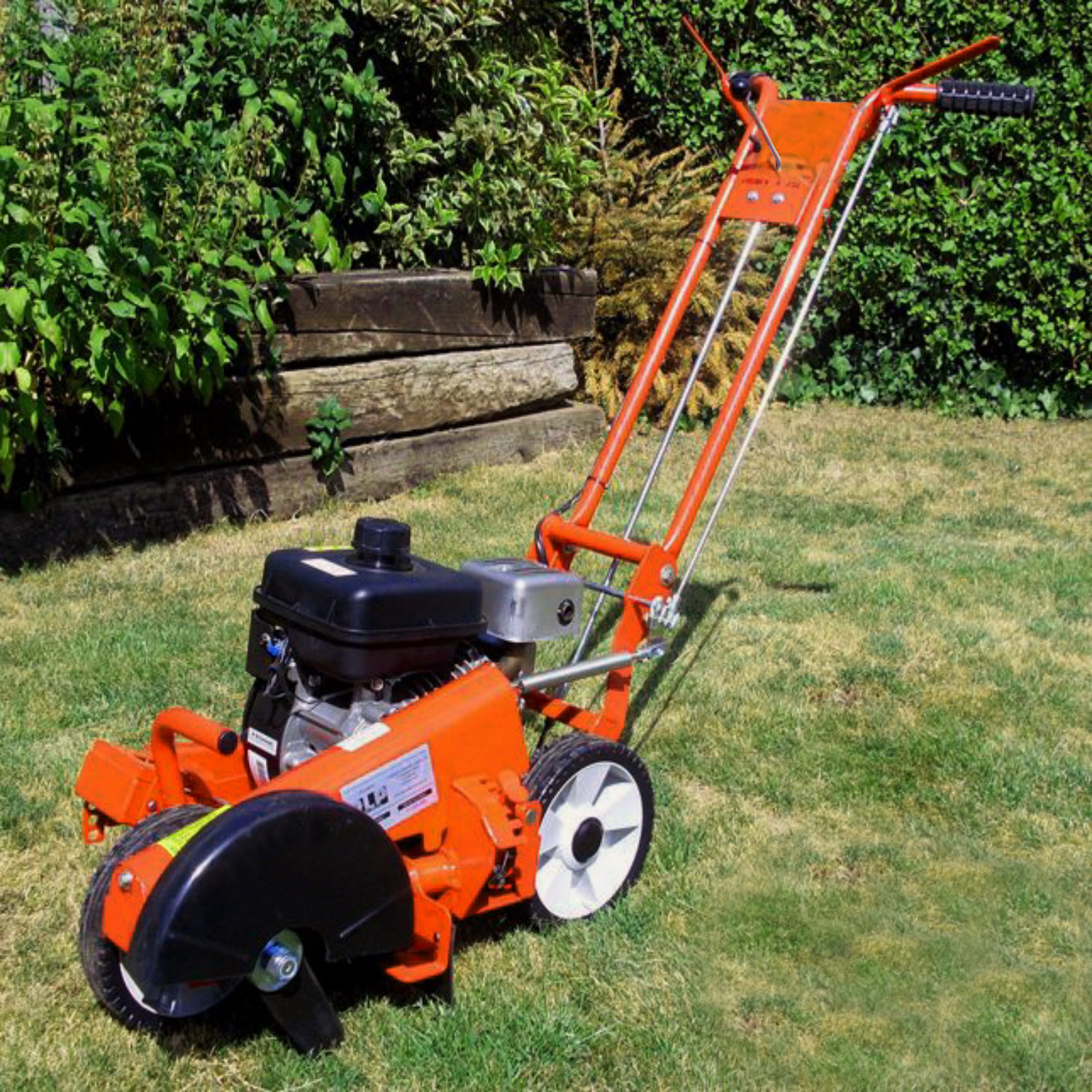
Spring lawn care season is here, and crisp, clean edges define professional-quality landscapes. Before you edge your first lawn, your powered edger needs these critical maintenance checks:
- Check engine oil level — top up or change if dirty (prevents engine damage)
- Replace old fuel — drain stale fuel, add fresh fuel with stabilizer
- Inspect and sharpen edger blade — dull blades tear grass, don't cut cleanly
- Check drive belt and clutch — ensures blade engagement and proper speed
- Inspect wheels and depth adjustment — critical for consistent edge depth
- Clean or replace air filter — dusty edging work clogs filters quickly
- Test spark plug condition — clean or replace if fouled from storage
These seven steps prevent the most common edger failures and ensure professional-quality edges all lawn care season.
Average maintenance time: 45 minutes
Parts cost (if needed): £30-80 / $38-100 / €35-95 / C$51-136
See Lawn Edger Engine parts here.
Why Lawn Edger Maintenance Matters Before Spring
What happens to edgers during winter storage:
- Fuel degrades and clogs carburetor jets (after 30-60 days)
- Edger blade develops surface rust and becomes dull
- Drive belt becomes brittle from cold temperatures
- Wheels seize from dirt and grass buildup
- Engine oil breaks down and loses viscosity
- Spark plugs foul from old fuel residue
- Debris hardens in blade housing and depth adjustment
The cost of skipping maintenance:
- Blade replacement: £25-60 / $32-76 / €29-70 / C$43-102 (vs sharpening £0-10 / $0-13 / €0-12 / C$0-17)
- Drive belt: £15-40 / $19-51 / €18-47 / C$26-68 (vs inspection £0)
- Carburetor rebuild: £50-100 / $63-126 / €58-116 / C$85-170 (vs fresh fuel £8 / $10 / €9 / C$13)
- Engine damage from low oil: £200-500+ / $250-630+ / €235-585+ / C$340-850+ (vs oil change £10 / $13 / €12 / C$17)
- Lost contracts: Poor-quality edges = customer complaints and lost business
Bottom line: Professional landscapers know — edge quality defines lawn care quality. 45 minutes of maintenance ensures clean, consistent results.
When to Service Your Lawn Edger for Spring Season
Regional Lawn Care Season Timing:
UK & Ireland:
- Service: Late March to early April 2026
- First edge: Mid-April (after first spring growth)
- Peak season: April-September
- Frequency: Weekly for maintained lawns, fortnightly for established edges
Northern Europe:
- Service: April 2026
- First edge: Late April to May
- Peak season: May-September
- Shorter season (maximize equipment reliability)
Southern Europe:
- Service: February-March 2026
- First edge: March (earlier growth)
- Peak season: March-October
- Extended season requires more frequent maintenance
US & Canada (varies by zone):
- Northern states/provinces: Service April-May 2026
- Southern states: Service February-March 2026 (some year-round)
- Midwest: Service mid-April 2026
Australia:
- Service: August-September 2026 (opposite seasons)
- Peak season: September-March
Key indicator: Service edger when grass starts active spring growth (typically when you start mowing regularly)
Spring Lawn Edger Maintenance Checklist
Step 1: Visual Inspection (5 minutes)
Before starting the engine, inspect the entire machine:
Edger Blade & Housing:
- ✅ Blade for damage, cracks, or excessive wear
- ✅ Blade mounting bolt tight (critical safety check)
- ✅ Blade guard/housing intact and secure
- ✅ No cracks in blade housing
- ✅ Depth adjustment mechanism moves freely
Frame & Wheels:
- ✅ Frame for cracks or damage (aluminum frames can crack)
- ✅ Wheels spin freely, no seized bearings
- ✅ Wheel height adjustment works smoothly
- ✅ Handle mounting secure
- ✅ All guards and covers in place
Drive System (if belt-driven):
- ✅ Drive belt visible through guard
- ✅ Belt not cracked, glazed, or frayed
- ✅ Clutch lever operates smoothly
- ✅ Pulleys not damaged or worn
Engine Exterior:
- ✅ Fuel tank cap seals (no leaks)
- ✅ Air filter housing intact
- ✅ Throttle cable moves freely
- ✅ Exhaust/muffler secure
- ✅ No visible damage to engine covers
Red flags requiring immediate attention:
- Cracked or bent edger blade (dangerous — replace immediately)
- Missing blade guard (serious safety hazard)
- Fuel leaking from carburetor (fire risk)
- Severely worn drive belt (will break under load)
- Loose blade mounting bolt (blade can detach)
Step 2: Engine Oil Check and Change (10 minutes)
Clean oil is essential for reliable edger performance.
How to check engine oil:
- Place edger on level ground
- Clean area around oil filler cap
- Remove dipstick and wipe clean
- Reinsert fully without screwing in (or screw in, depending on type)
- Remove and check level against markings
What to look for:
- Low oil: Top up immediately (never run low)
- Dark/dirty oil: Normal after use — change if over 6 months old
- Milky appearance: Water contamination (head gasket concern)
- Gritty texture: Metal particles (engine wear)
Recommended oil for lawn edgers:
Spring/Summer (April-September):
- SAE 30 for temperatures above 5°C / 41°F
- 10W-30 for variable spring weather
- 5W-30 synthetic for cold spring mornings
Oil change procedure:
- Run engine 2-3 minutes to warm oil
- Turn engine OFF
- Place drain pan under engine
- Remove drain plug (typically 17mm)
- Drain completely (may take 5-10 minutes)
- Replace drain plug with new washer if available
- Refill with correct oil type and amount (check manual — typically 0.5-0.6L)
- Check level with dipstick
- Dispose of old oil at recycling center
Oil change interval: Every 50 hours OR annually at spring service
Step 3: Fuel System Service (10 minutes)
Old fuel is the #1 cause of "edger won't start" problems in spring.
Why fuel service is critical:
- Fuel degrades after 30 days (varnish forms)
- Ethanol absorbs moisture (causes corrosion)
- Tiny carburetor jets clog easily
- Edgers often sit idle for months in winter
Fuel system service:
If fuel is 3+ months old (always at spring service):
- Turn fuel tap to OFF (if fitted)
- Disconnect fuel line from carburetor
- Drain into approved container
- Inspect fuel tank interior for rust/debris
- If tank is rusty: remove, clean thoroughly, dry completely
- Reconnect fuel line
- Fill with fresh fuel
- Add fuel stabilizer (extends life to 12-24 months)
- Turn fuel tap ON
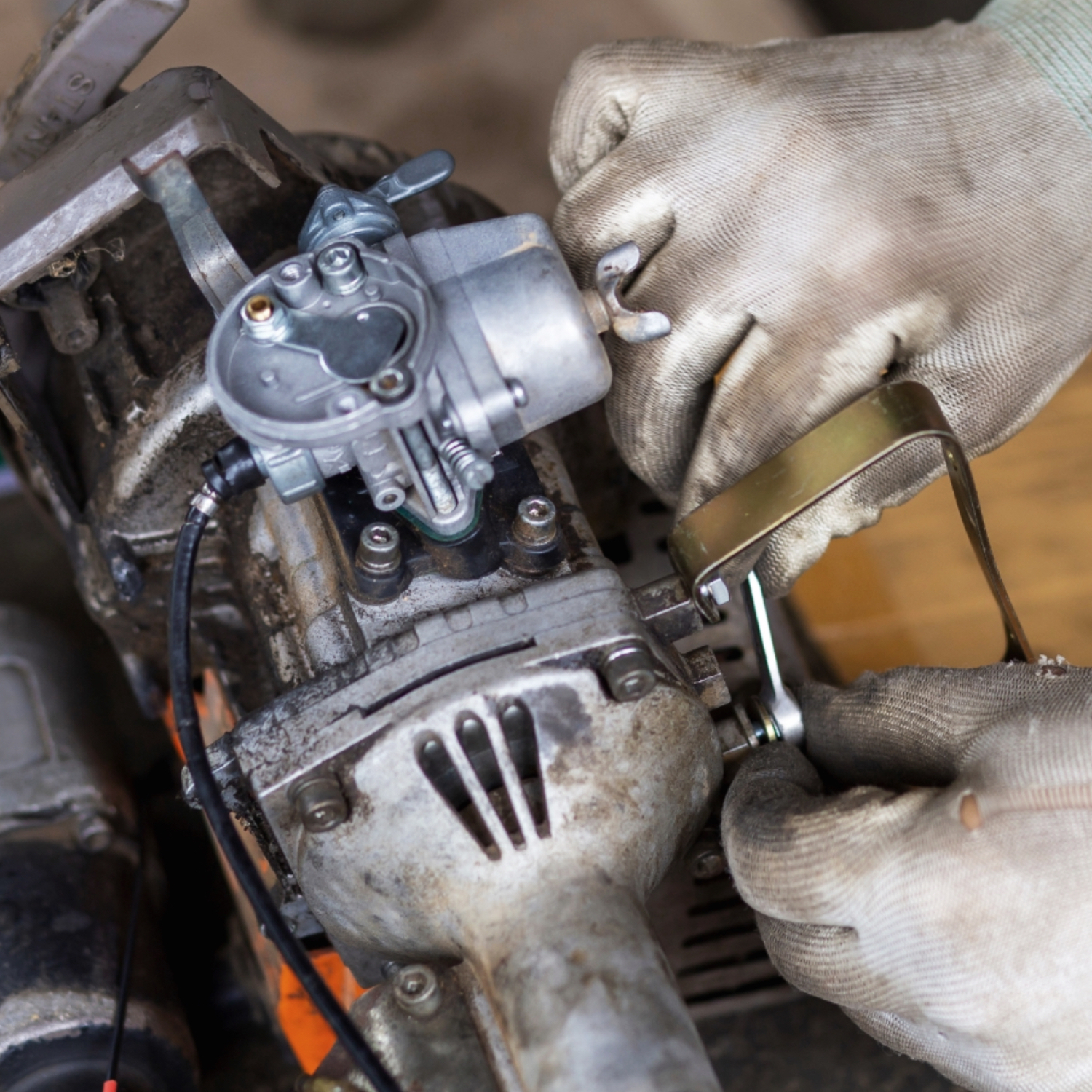
Carburetor service (if engine won't start):
Symptoms of dirty carburetor:
- Engine cranks but won't fire
- Starts briefly then dies immediately
- Runs only with choke fully closed
- Rough running, surging, or lack of power
- Engine floods easily
Quick cleaning method:
- Remove air filter
- Start engine (or attempt to start)
- Spray carburetor cleaner into air intake while cranking
- Let penetrate 10-15 minutes
- Reinstall air filter
- Try starting normally
If cleaning doesn't work: Full carburetor rebuild needed (remove, disassemble, clean all jets, new gaskets, reassemble)
Lawn edger carburetors in stock →
Step 4: Air Filter Service (5 minutes)
Edgers work at ground level in dusty conditions — air filter maintenance is critical.
Why air filters matter for edgers:
- Operate in grass clippings, dust, and soil particles
- Ground-level work = maximum dust exposure
- Clogged filter causes hard starting and power loss
- Dirty filter lets debris into engine (causes wear)
How to service air filter:
Foam filters (most common on edgers):
- Remove air filter cover (usually wing nut or clips)
- Remove foam element
- Inspect for tears, hardening, or severe degradation
- If damaged: replace (£8-15 / $10-19 / €9-18 / C$13-26)
- If serviceable: wash in warm soapy water
- Rinse thoroughly until water runs clear
- Squeeze dry (don't wring or twist)
- Apply foam filter oil or SAE 30 engine oil
- Squeeze to distribute oil evenly (should be damp, not dripping)
- Reinstall when properly oiled
Paper filters (some models):
- Remove from housing
- Tap gently against hand to dislodge dust
- Hold to light — should see through
- If very dirty: replace (£10-18 / $13-23 / €12-21 / C$17-31)
- Never wash paper filters (destroys them)
- If oil-soaked or torn: replace immediately
Dual element filters:
- Service foam pre-filter (wash and oil)
- Inspect paper main filter (replace if dirty)
- Never operate without both elements
Service interval for edgers:
- Check: Every 10 hours
- Clean: Every 25 hours
- Replace paper elements: Every 50 hours or annually
- Replace foam elements: When degraded or torn
Lawn edger air filters available →
Step 5: Spark Plug Inspection (5 minutes)
Reliable ignition ensures easy starting and smooth running.
How to inspect spark plug:
- Disconnect spark plug lead (pull boot, not wire)
- Clean around spark plug base (prevents dirt entering cylinder)
- Use spark plug wrench (usually 16mm or 19mm)
- Remove plug carefully
- Inspect electrode and insulator tip
Spark plug condition guide:
GOOD condition (clean and reuse):
- Light tan/grey color
- Minimal electrode wear
- Clean ceramic insulator
- Gap 0.6-0.8mm / 0.024-0.031"
REPLACE if:
- Black/sooty deposits: Rich mixture or old fuel (replace plug, check carburetor)
- Wet with fuel: Flooded engine (dry and reinstall, check for over-fueling)
- White/blistered: Engine running too hot (replace, check cooling fins)
- Oily deposits: Oil entering combustion chamber (replace plug, check valve seals)
- Eroded electrode: Normal wear after 100 hours (replace)
- Cracked insulator: Failed insulation (replace immediately)
Spark test:
- Reconnect lead to removed plug
- Hold metal threads against engine block (grounded)
- Pull starter cord briskly
- Should see bright blue spark at electrode gap
- Weak orange or no spark: Replace plug, check ignition system if problem continues
Spark plug replacement:
- Cost: £5-10 / $6-13 / €6-12 / C$9-17
- Replace annually or every 100 hours
- Always use correct type for your engine
Lawn edger spark plugs in stock →
Step 6: Edger Blade Inspection and Sharpening (15 minutes)
THE MOST CRITICAL STEP — blade condition determines edge quality.
Why blade sharpness matters:
- Sharp blade: Clean cut, professional appearance, healthy grass
- Dull blade: Tears grass, ragged edges, brown tips, disease entry point
- Professional landscapers sharpen blades weekly during peak season
How to inspect edger blade:
Safety first:
- Disconnect spark plug lead before touching blade
- Wear heavy gloves (blades are sharp)
- Secure edger so it can't move
What to check:
Visual inspection:
- ✅ Blade edge sharpness (run finger along carefully)
- ✅ Nicks, chips, or gouges in cutting edge
- ✅ Cracks starting from edges or center hole
- ✅ Severe wear (blade thickness reduced significantly)
- ✅ Bending or warping
- ✅ Mounting hole wear (elongated from vibration)
Balance check (after sharpening):
- Mount blade on screwdriver through center hole
- Blade should stay level (balanced)
- If one side drops: remove more metal from heavy side
Blade wear indicators:
New blade: Crisp, defined cutting edge
Serviceable blade: Edge slightly rounded but functional
Worn blade: Edge severely rounded, thin from multiple sharpenings
Replace when: Blade width reduced by 25% from sharpening, cracked, or bent
How to sharpen edger blade:
Tools needed:
- Angle grinder with grinding disc (fastest) OR
- Metal file (slower but works)
- Safety glasses
- Work gloves
- Vise or secure clamping
Sharpening procedure:
-
Remove blade:
- Disconnect spark plug lead
- Secure blade with block of wood
- Remove center mounting bolt (usually 17mm or 19mm)
- Note blade orientation for reinstallation
-
Clean blade:
- Wire brush off dirt, grass, and rust
- Inspect for hidden cracks
-
Sharpen cutting edge:
- Secure blade in vise
- Maintain original bevel angle (typically 30-45°)
- Grind from top side only (preserve bottom flat surface)
- Make smooth, even passes along edge
- Remove nicks and chips
- Don't overheat blade (causes loss of temper)
- Cool in water if blade gets hot
-
Check balance:
- Mount on screwdriver through center hole
- Should stay level
- If unbalanced: grind heavy side until level
-
Reinstall blade:
- Ensure correct orientation (cutting edge faces direction of rotation)
- Install mounting bolt with washer
- Tighten securely (loose blade is dangerous)
- Reconnect spark plug lead
Sharpening frequency:
- Professional use: Weekly during season
- Homeowner use: Every 4-6 weeks
- After hitting hard objects: Immediately (check for damage)
Blade replacement cost: £25-60 / $32-76 / €29-70 / C$43-102
Replacement edger blades available →
Step 7: Drive System Check (Belt-Driven Models) (8 minutes)
Not all edgers have belt drives — skip this if your edger has direct drive.
How belt-driven edgers work:
- Engine pulley drives belt
- Belt transfers power to blade pulley
- Clutch engages/disengages blade
- Blade spins at controlled speed
Drive belt inspection:
Remove belt guard to access belt:
What to check:
- ✅ Cracks on inside surface (belt will fail soon)
- ✅ Glazed/shiny surface (belt is slipping)
- ✅ Frayed edges (misalignment or worn pulleys)
- ✅ Missing chunks or pieces (replace immediately)
- ✅ Oil contamination (clean and find source)
- ✅ Proper tension (10-15mm / 0.4-0.6" deflection)
Belt tension check:
- Press belt midpoint between pulleys
- Should deflect 10-15mm / 0.4-0.6"
- Too loose: blade won't reach full speed
- Too tight: bearing wear, belt premature failure
Belt adjustment:
Most edgers use one of these methods:
Type 1 (idler pulley):
- Loosen idler pulley bolt
- Move idler to adjust tension
- Re-tighten bolt
Type 2 (engine position):
- Loosen engine mounting bolts
- Slide engine to adjust belt tension
- Re-tighten bolts
When to replace drive belt:
- Any visible cracks
- Glazed surface (slipping)
- Frayed or worn edges
- Oil contamination that won't clean
- Over 3 years old (even if looks OK)
Belt replacement cost: £15-40 / $19-51 / €18-47 / C$26-68
Lawn edger drive belts in stock →
Step 8: Wheels and Depth Adjustment Check (5 minutes)
Critical for consistent edge depth and straight lines.
Wheel inspection:
What to check:
- ✅ Wheels spin freely (not seized)
- ✅ Bearings not worn (no excessive side-to-side play)
- ✅ Wheel height adjustment works smoothly
- ✅ Adjustment locks securely
- ✅ Wheels same height (ensures level cutting)
Depth adjustment mechanism:
Types of depth adjustment:
Wheel height adjustment (most common):
- Wheels raise/lower relative to blade
- Higher wheels = deeper cut
- Lower wheels = shallow cut
- Both wheels must be same height
Skid plate adjustment (some models):
- Metal skid plate slides against ground
- Adjust distance from blade to skid
- Controls cutting depth
What to check:
- Adjustment mechanism moves freely (not seized)
- Locks securely in position (doesn't slip during use)
- All adjustment holes/positions functional
- No cracks in mounting brackets
Lubrication:
- Apply light oil to adjustment points
- Grease wheel bearings if fittings present
- Work adjustment through full range to distribute lubricant
Typical edge depths:
New edge (first time): 50-75mm / 2-3" deep
Maintained edge: 25-40mm / 1-1.5" deep
Shallow refresh: 15-25mm / 0.5-1" deep
Step 9: Throttle Cable Check (3 minutes)
Smooth throttle control ensures safe operation.
What to check:
Throttle cable:
- Moves smoothly through full range
- Returns to idle when released
- No sticking or binding
- Not frayed at cable ends
- Engine responds immediately to throttle
Throttle lever/trigger:
- Moves freely without excessive effort
- Returns to idle position (spring tension)
- No cracks in lever
- Comfortable grip
Cable maintenance:
If cable sticks or binds:
- Disconnect cable at engine end
- Apply light penetrating oil into outer cable sheath
- Work cable back and forth to distribute oil
- Reconnect cable
- Test operation
If cable is frayed or kinked:
- Replace immediately (safety concern)
- Cost: £8-20 / $10-25 / €9-23 / C$13-34
Cable adjustment:
Most edgers have adjuster at handlebar end:
- Loosen locknut
- Turn adjuster to increase/decrease cable tension
- Engine should idle when lever released
- Full throttle should achieve maximum RPM
- Re-tighten locknut
Edger throttle cables available →
Step 10: First Start Procedure (After Maintenance)
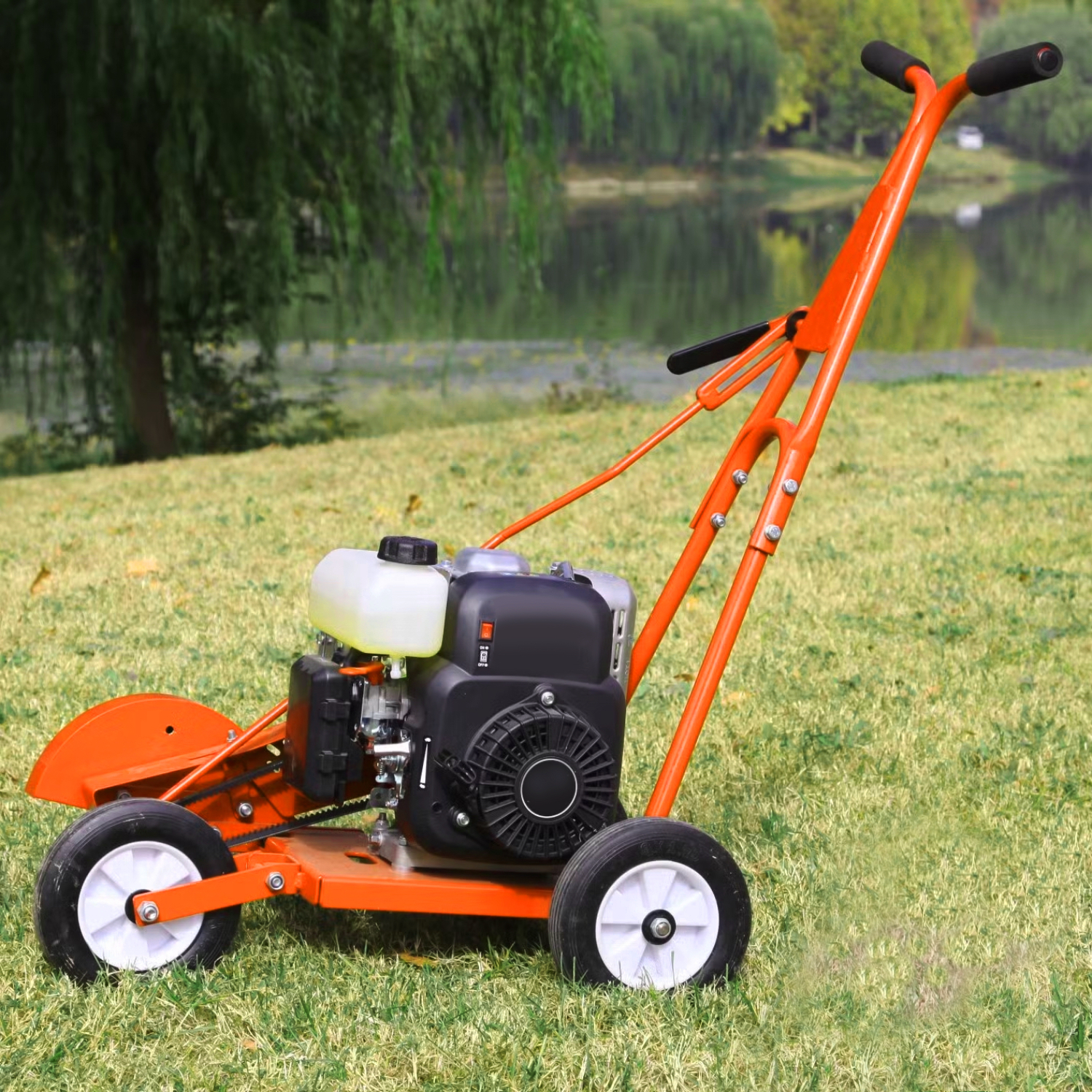
Safe startup sequence:
Pre-start checklist:
- ✅ Engine oil at correct level
- ✅ Fresh fuel in tank
- ✅ Air filter clean and installed
- ✅ Spark plug tight and connected
- ✅ Edger blade sharp and secure
- ✅ Drive belt (if fitted) tensioned correctly
- ✅ All guards in place
- ✅ Clear area around edger
Starting procedure:
- Place edger on level ground
- Turn fuel tap ON (if fitted)
- Close choke (cold engine) or open (warm)
- Set throttle to START position
- Pull starter cord smoothly (don't yank)
- Once started, gradually open choke as engine warms
- Let engine warm 2-3 minutes before engaging blade
Test blade engagement:
- Increase throttle to half speed
- Blade should engage smoothly (belt-driven) or be spinning (direct drive)
- No unusual noises (grinding, squealing)
- Blade spins at consistent speed
- Return to idle — blade stops or disengages smoothly
Troubleshooting first start:
Engine won't start:
- Fuel tap ON (if fitted)
- Choke fully CLOSED (cold start)
- Fresh fuel in tank
- Spark plug lead connected
Engine starts then dies:
- Old fuel (drain and replace)
- Dirty carburetor (clean)
- Air filter blocked
Blade won't engage:
- Drive belt broken/slipped off (belt-driven models)
- Belt too loose (needs tensioning)
- Clutch not engaging
Blade vibrates excessively:
- Blade unbalanced (needs re-sharpening/balancing)
- Blade bent (replace)
- Blade mounting bolt loose (dangerous — tighten immediately)
Common Lawn Edger Problems & Solutions
Problem 1: "Edger won't start after winter"
Diagnosis checklist:
1. Old fuel (90% of cases):
- Symptom: Cranks but won't fire, or starts briefly then dies
- Solution: Drain fuel tank, add fresh fuel
- Cost: £0 (just fuel cost)
2. Fouled spark plug:
- Symptom: No spark or weak spark
- Solution: Clean or replace spark plug
- Cost: £5-10 / $6-13 / €6-12 / C$9-17
- Spark plugs →
3. Dirty carburetor:
- Symptom: Won't start even with fresh fuel and new plug
- Solution: Spray carburetor cleaner or rebuild
- Cost: £8-15 / $10-19 / €9-18 / C$13-26 (cleaner), £50-100 / $63-126 / €58-116 / C$85-170 (rebuild)
- Carburetor parts →
4. Blocked air filter:
- Symptom: Starts but runs rough or dies quickly
- Solution: Clean or replace air filter
- Cost: £8-15 / $10-19 / €9-18 / C$13-26
Problem 2: "Edger creates ragged, torn edges instead of clean cuts"
Most common complaint — indicates blade problems.
Causes:
1. Dull blade (95% of cases):
- Check: Run finger along blade edge (carefully)
- Solution: Sharpen blade
- Cost: £0 (DIY), £10-20 / $13-25 / €12-23 / C$17-34 (professional sharpening)
2. Blade installed backwards:
- Check: Cutting edge should face direction of rotation
- Solution: Remove and reinstall correctly
- Cost: £0
3. Blade damaged (nicked or bent):
- Check: Inspect blade closely
- Solution: Sharpen out small nicks, replace if bent or severely damaged
- Cost: £25-60 / $32-76 / €29-70 / C$43-102 (replacement)
- Blades →
4. Blade speed too slow:
- Check: Belt-driven models — belt slipping
- Solution: Adjust or replace drive belt
- Cost: £15-40 / $19-51 / €18-47 / C$26-68
Problem 3: "Edge depth inconsistent or uneven"
Causes poor appearance and unprofessional results.
Causes:
1. Wheels at different heights:
- Check: Measure from ground to wheel axle on both sides
- Solution: Adjust both wheels to same height
- Cost: £0
2. Worn or seized wheel bearings:
- Check: Spin wheels — should turn freely
- Solution: Lubricate or replace bearings
- Cost: £8-25 / $10-32 / €9-29 / C$13-43
3. Depth adjustment slipping:
- Check: Lock mechanism on adjustment
- Solution: Tighten or replace worn adjustment parts
- Cost: £5-20 / $6-25 / €6-23 / C$9-34
4. Operator technique:
- Issue: Walking too fast or uneven pressure
- Solution: Maintain steady pace, let machine do the work
- Cost: £0
Problem 4: "Edger blade won't engage or stops under load"
Belt-driven models only.
Causes:
1. Worn or loose drive belt:
- Check: Belt condition and tension
- Solution: Adjust tension or replace belt
- Cost: £15-40 / $19-51 / €18-47 / C$26-68
- Drive belts →
2. Clutch not engaging:
- Check: Clutch cable adjustment
- Solution: Adjust cable or replace clutch mechanism
- Cost: £8-60 / $10-76 / €9-70 / C$13-102
3. Engine lacks power:
- Check: Air filter, spark plug, carburetor
- Solution: Service engine (see earlier steps)
- Cost: Varies depending on issue
Problem 5: "Excessive vibration through handle"
Uncomfortable and indicates problems.
Causes:
1. Blade unbalanced:
- Check: Balance blade on screwdriver through center hole
- Solution: Re-sharpen to balance, or replace
- Cost: £0 (re-sharpen), £25-60 / $32-76 / €29-70 / C$43-102 (replace)
2. Blade bent:
- Check: Lay blade flat on workbench — should sit flat
- Solution: Replace blade (don't attempt to straighten)
- Cost: £25-60 / $32-76 / €29-70 / C$43-102
3. Blade mounting bolt loose:
- Check: Try moving blade on shaft (engine OFF, spark plug disconnected)
- Solution: Tighten bolt immediately (dangerous if loose)
- Cost: £0
4. Damaged blade housing or bearings:
- Check: Look for cracks, feel for bearing roughness
- Solution: Replace damaged parts
- Cost: £30-100 / $38-126 / €35-116 / C$51-170
Lawn Edger Parts to Stock for Season
Essential spares for uninterrupted lawn care:
Engine Parts:
- ✅ Spark plug × 2 — £5-10 / $6-13 / €6-12 / C$9-17 each
- ✅ Air filter × 2 — £8-15 / $10-19 / €9-18 / C$13-26 each
- ✅ Fuel filter × 1 — £5-10 / $6-13 / €6-12 / C$9-17
- ✅ Recoil starter × 1 — £25-50 / $32-63 / €29-58 / C$43-85
Blade & Drive:
- ✅ Edger blade × 1 spare — £25-60 / $32-76 / €29-70 / C$43-102
- ✅ Drive belt × 1 (belt-driven models) — £15-40 / $19-51 / €18-47 / C$26-68
- ✅ Blade mounting bolt/washer × 1 set — £3-8 / $4-10 / €4-9 / C$5-13
Controls:
- ✅ Throttle cable × 1 — £8-20 / $10-25 / €9-23 / C$13-34
Consumables:
- ✅ Engine oil (SAE 30 or 10W-30) × 1L
- ✅ Fuel stabilizer × 1 bottle
- ✅ Multi-purpose grease × 1 tube
Total preventive kit: £100-220 / $126-280 / €116-260 / C$170-375
Cost of edger downtime:
- Lost work time: Can't complete lawn jobs without edger
- Customer complaints: Poor edge quality = reputation damage
- Rush parts delivery: £10-30 / $13-38 / €12-35 / C$17-51
Professional Edging Techniques
Tips for perfect edges every time:
Before You Edge:
- Mow first — easier to see edge line, cleaner results
- Mark sprinkler heads/invisible dog fences — avoid damage
- Check for rocks and debris — remove before edging
- Choose correct depth — new edges deeper, maintained edges shallow
Edging Technique:
Starting the edge:
- Start at one end, work systematically
- Walk at steady pace (don't rush)
- Let machine do the work (don't force)
- Keep blade perpendicular to ground
- Follow existing edge line or string guide
Maintaining straight lines:
- Focus on point 2-3 meters ahead
- Don't watch blade (causes wandering)
- Use edge of pavement as guide
- For curved edges: small adjustments, not sharp turns
Around obstacles:
- Slow down near sprinklers, posts, trees
- Stop engine if clearing debris from blade
- Resume at same depth setting
After Edging:
- Blow debris — use leaf blower to clear clippings
- Inspect edge — check for missed spots
- Touch up — re-edge any uneven sections
- Clean equipment — remove grass buildup from blade and housing
Edge Maintenance Schedule:
New edges (first time): 50-75mm / 2-3" deep
Established edges in spring: 40-50mm / 1.5-2" deep
Maintenance edging (weekly/fortnightly): 25-40mm / 1-1.5" deep
Light touch-up: 15-25mm / 0.5-1" deep
Regional Lawn Care Season Tips
UK & Ireland
Peak edging season: April-September 2026
Challenges:
- Wet grass edges harder to cut cleanly
- Frequent rain keeps grass growing (weekly edging needed)
- Clay soils create hard edge line (wear on blades)
Tips:
- Edge when grass is dry (afternoon on sunny days)
- Sharpen blade weekly in peak season
- Use shallow depth on established edges (reduces effort)
Typical schedule:
- Spring: Edge every 2 weeks
- Peak summer: Edge weekly
- Autumn: Edge every 3-4 weeks
Northern Europe
Peak season: May-September 2026
Similar to UK:
- Wet conditions common
- Shorter but intense growing season
Tips:
- Service edger in early spring
- Sharpen blade frequently
- Clean after each use (grass buildup)
Southern Europe
Extended season: March-October 2026
Challenges:
- Dry, hard soil (difficult cutting)
- Dust clogs air filters quickly
- Longer season = more wear on equipment
Tips:
- Water edge line day before (softens soil)
- Clean air filter after each use
- Use slightly deeper depth in hard soil
- Mid-season blade replacement may be needed
US & Canada
Northern states/provinces: May-September 2026
- Short season (maximize each mowing)
- Cool-season grasses (vigorous spring growth)
Southern states: March-November 2026 (some year-round)
- Extended season
- Warm-season grasses
- Multiple growing seasons
Midwest: April-October 2026
- Moderate season
- Mix of grass types
Australia
Peak season: September-March 2026
Challenges:
- Hot, dry conditions
- Buffalo and couch grasses (tough to edge)
- Dust and heat hard on equipment
Tips:
- Edge in morning or evening (avoid heat)
- Water edges day before
- Clean air filter daily
- Check oil level frequently
Frequently Asked Questions
How often should I sharpen my lawn edger blade?
Professional landscapers: Sharpen weekly during peak season (April-September). Homeowners: Every 4-6 weeks of regular use, or when edges start looking ragged instead of clean. Sharpen immediately after hitting rocks, concrete, or hard objects. A sharp blade cuts cleanly; a dull blade tears grass, leaving brown edges. Replacement blades available →
My edger won't start after winter storage. What should I check first?
Check these in order: 1) Drain old fuel and add fresh fuel (causes 90% of spring startup problems). 2) Check spark plug — remove, clean, or replace if fouled. 3) Check engine oil level (low oil triggers shutoff). 4) Clean or replace air filter if dirty. 5) Spray carburetor cleaner into intake if above steps don't work. Old fuel is almost always the culprit. If you need further help try our Interactive Repair Guides.
Why does my edger create ragged, torn edges instead of clean cuts?
Most common cause is a dull blade. Dull blades tear grass rather than cutting it cleanly, leaving ragged brown edges that look unprofessional. Solution: sharpen the blade. Other causes: blade installed backwards (cutting edge must face rotation direction), blade damaged or bent (replace), or engine not reaching full speed (check drive belt tension on belt-driven models).
How deep should I set my lawn edger?
New edge (first time): 50-75mm (2-3 inches) deep to establish clean line. Established edge in spring: 40-50mm (1.5-2 inches) to refresh after winter. Regular maintenance edging: 25-40mm (1-1.5 inches) every 1-2 weeks. Light touch-up: 15-25mm (0.5-1 inch) for well-maintained edges. Adjust depth using wheel height settings — both wheels must be same height for even cutting.
Can I edge when grass is wet?
Yes, but results are less clean. Wet grass tends to clump and stick to the blade, making cutting less precise. Wet soil can also clog the blade housing and cause mud buildup. Best practice: Edge when grass is dry (afternoon on sunny days after morning dew has evaporated). If you must edge wet grass, clean blade housing frequently during work and expect to sharpen blade more often.
How do I edge around sprinkler heads without damaging them?
Prevention is key: 1) Mark all sprinkler head locations before you start (small flags work well). 2) Approach slowly when near marked areas. 3) Reduce engine speed near sprinklers. 4) Use shallow depth setting. 5) Edge parallel to sprinkler location, not towards it. If you hit a sprinkler: stop immediately, inspect for damage, replace damaged heads. Some landscapers edge by hand near irrigation with half-moon edger.
Why does my edger vibrate excessively?
Most common causes: 1) Blade unbalanced from uneven sharpening (re-sharpen to balance or replace). 2) Blade bent from hitting hard object (replace — don't straighten). 3) Blade mounting bolt loose (dangerous — tighten immediately). 4) Damaged bearings in blade housing. Test: disconnect spark plug, spin blade by hand — should rotate smoothly without wobble. If blade wobbles, it needs balancing or replacement.
What's the difference between a lawn edger and a string trimmer for edging?
Lawn edger (purpose-built): Vertical steel blade cuts precise edge, consistent depth, professional results, faster for long edges, cleaner cut. String trimmer (used vertically): Flexible nylon string, less precise, harder to maintain consistent depth, better for small touch-ups and obstacles, blade can damage trimmer designed for horizontal use. For professional-quality edges on lawns, driveways, and paths: use a proper lawn edger.
How often should I change edger engine oil?
Every 50 hours of use or once per year, whichever comes first. Change oil at the start of each lawn care season (spring) if edger was stored over winter. Edgers operate at ground level in dusty conditions, which contaminates oil faster. Check oil level every 10 hours during season and top up as needed. Use SAE 30 for warm weather or 10W-30 for variable spring/autumn temperatures.
Emergency Edger Parts Checklist
Keep these spares for quick repairs:
Engine Parts:
- ✅ Spark plug × 2
- ✅ Air filter × 2 (clean frequently, replace when worn)
- ✅ Fuel filter × 1
- ✅ Starter cord × 1 (recoil rope)
Blade & Drive:
- ✅ Edger blade × 1 spare (have backup for blade damage)
- ✅ Drive belt × 1 (belt-driven models)
- ✅ Blade bolt/washer × 1 set
Controls:
- ✅ Throttle cable × 1
Tools & Consumables:
- ✅ Engine oil (SAE 30) × 1L
- ✅ Spark plug wrench
- ✅ Blade sharpening file or grinding disc
- ✅ Screwdriver set
- ✅ Adjustable wrench (17mm, 19mm)
Shop Complete Edger Parts Kit →
Key Takeaways: Lawn Edger Maintenance
Remember these five essentials:
- ? Sharp blade is critical — Sharpen weekly for professionals, monthly for homeowners
- ?️ Fresh fuel prevents startup problems — Drain old fuel before spring
- ?️ Clean air filter frequently — Ground-level work = maximum dust exposure
- ? Wheel height adjustment — Both wheels same height for consistent depth
- ? Check blade mounting bolt — Must be tight (loose blade is dangerous)
45 minutes of spring maintenance = professional-quality edges all season.
Need Lawn Edger Parts Fast?
Gethergoing Parts stocks thousands of lawn edger engine parts for fast delivery:
- ✅ All major edger engine brands (Loncin, Lifan, Ducar, and more)
- ✅ Genuine and compatible replacement parts
- ✅ Edger blades, air filters, spark plugs, drive belts in stock
- ✅ Expert technical support team
- ✅ Worldwide shipping (UK, Europe, USA, Canada, Australia)
Free help: Can't identify your edger model? Send us a photo — our engineers will identify it and recommend the right parts.
Browse Lawn Edger Engine Parts →
Questions about your specific edger? Visit GetHerGoing.com for FREE interactive repair guides.
About Gethergoing Parts
This guide was written by the Gethergoing technical team, specialists in small engine maintenance for lawn care and groundwork equipment. Gethergoing Parts supplies engine parts for edgers, pressure washers, rotovators, compactors, and other machinery worldwide.
This information is intended as a guide only for trained repair engineers and does not replace professional training. By using this guide you agree to our T&C. E&EO
Why Trust This Guide?
This guide was written by the Generator Guru / Gethergoing technical team, qualified engineers with over 18 years of experience supporting 100,000+ customers annually. We stock over 1 million parts and provide free repair support at generatorguru.com/need-help and gethergoing.com.


