
Pressure Washer Spring Maintenance: Complete Checklist Before Your First Clean
Published by Get Her Going Technical Team on 2nd Mar 2026
Last Updated: March 2026 | Reading Time: 10 minutes
Quick Answer: 7 Essential Checks Before Using Your Pressure Washer This Spring

Spring cleaning season is here, but your pressure washer has been sitting idle all winter. Before you fire it up, complete these critical maintenance checks:
- Check engine oil level — top up if low (prevents engine damage)
- Inspect water pump — look for cracks from freezing, test seals
- Replace old fuel — drain stale fuel, add fresh fuel with stabilizer
- Test spray nozzles — clean blockages, replace damaged tips
- Inspect hoses — check for cracks, kinks, or worn connectors
- Check spark plug — clean or replace if fouled
- Lubricate pump — add pump oil or saver if required
These seven steps prevent the most common spring startup failures and ensure safe, effective cleaning all season.
See Pressure Washer parts here.
Why Spring Maintenance Matters for Pressure Washers
What happens during winter storage:
- Fuel degrades and gums up the carburetor (after 30-60 days)
- Water left in pump freezes and cracks seals/valves (in freezing temperatures)
- Rubber hoses become brittle and crack
- Spark plugs foul from old fuel residue
- Pump seals dry out and leak when restarted
- Unloader valves stick from lack of use
The cost of skipping maintenance:
- Pump replacement: £80-£300 / $100-$380 / €95-€350 / C$135-$510 (vs seal kit £15 / $19 / €18 / C$26)
- Carburetor rebuild: £60-£120 / $75-$150 / €70-€140 / C$100-$200 (vs fresh fuel £8 / $10 / €9 / C$13)
- Engine damage from low oil: £200-£500+ / $250-$630+ / €235-€585+ / C$340-$850+ (vs oil change £10 / $13 / €12 / C$17)
- Lost time: 3-7 days waiting for repairs during peak season
Bottom line: 30 minutes of spring maintenance saves hundreds in repairs and keeps you working.
Spring Pressure Washer Maintenance Checklist
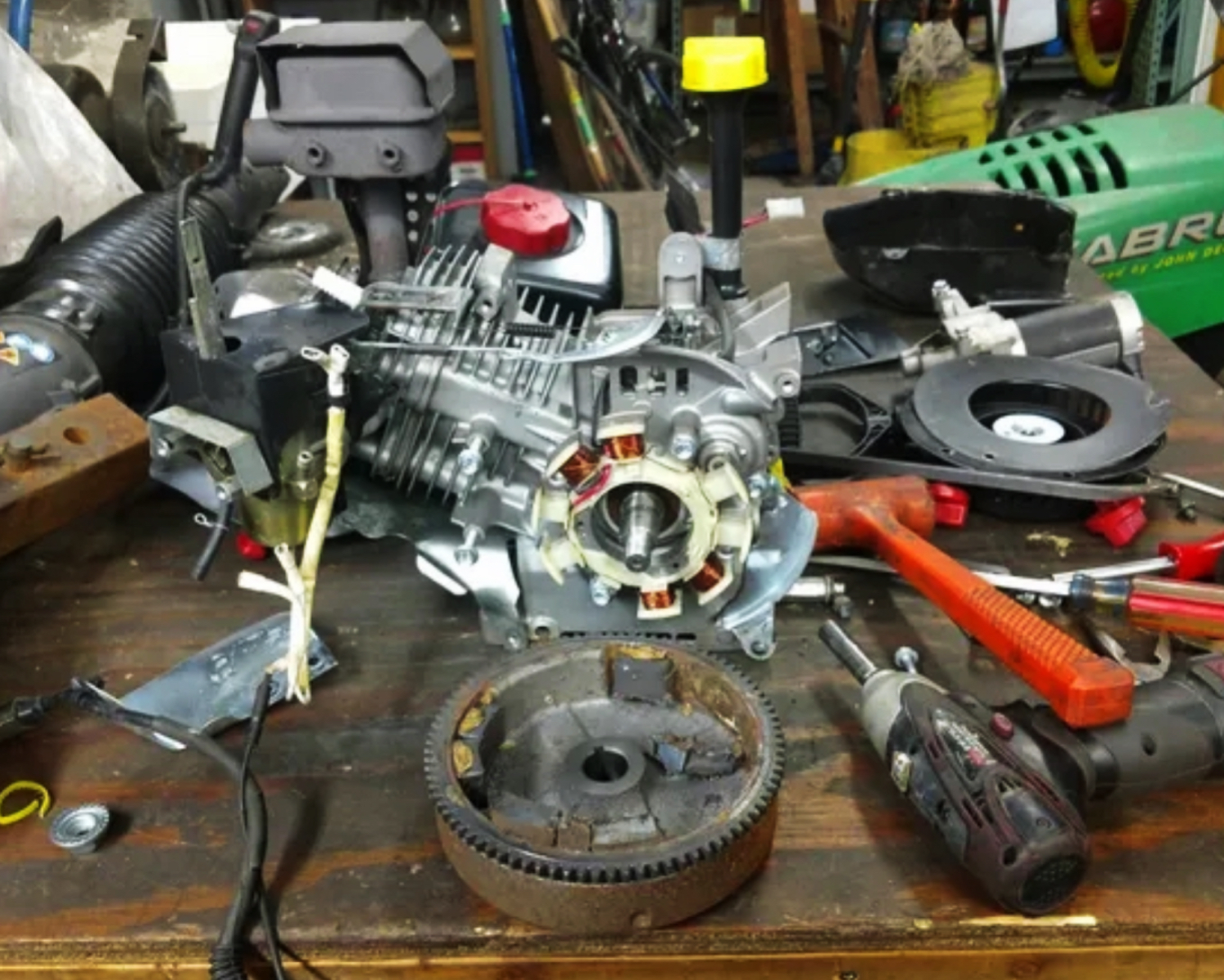
Step 1: Visual Inspection (5 minutes)
Before starting the engine, inspect:
Exterior:
- ✅ Frame/chassis — check for rust, damage, loose bolts
- ✅ Wheels/handle — ensure mobility for maneuverability
- ✅ Engine covers — look for cracks, missing parts
- ✅ Fuel tank — check for leaks, damage, cap seal
Hoses & Connections:
- ✅ High-pressure hose — look for cracks, abrasions, kinks
- ✅ Water inlet hose — check for splits, worn connectors
- ✅ Quick-connect fittings — ensure they seal properly
- ✅ Spray gun trigger — test for smooth operation
Water Pump:
- ✅ Pump housing — look for cracks (freeze damage common)
- ✅ Inlet filter — remove and clean debris
- ✅ Pressure relief valve — check for corrosion
- ✅ Oil reservoir (if oil-lubricated pump) — check level through sight glass
Red flags that need immediate attention:
- Cracked pump housing (replace pump or housing)
- Fuel leaking from carburetor (rebuild needed)
- Damaged high-pressure hose (replace immediately — safety hazard)
- Rust inside fuel tank (needs cleaning or replacement)
Step 2: Engine Oil Check (3 minutes)
Oil is critical for engine longevity.
How to check:
- Place pressure washer on level surface
- Remove oil dipstick/filler cap
- Wipe dipstick clean
- Reinsert fully, then remove to check level
- Oil should be between MIN and MAX marks
What to look for:
- Low oil: Top up immediately (engines can seize within minutes)
- Dark/dirty oil: Change oil if used 20+ hours or 6+ months old
- Milky oil: Water contamination (head gasket issue — needs repair)
- Metal particles: Bearing wear (serious engine damage)
Recommended oil:
- 10W-30 non-synthetic for spring/summer use in temperate climates
- SAE 30 non-synthetic for warmer climates (above 15°C / 59°F)
- 5W-30 non-synthetic for cold starts (below 5°C / 41°F)
Change interval: Every 50 hours or annually (whichever comes first)
Step 3: Fuel System Service (10 minutes)
This is the #1 cause of spring startup failure.
Why old fuel is a problem:
- Fuel degrades after 30 days (gums form)
- Ethanol absorbs water (corrodes fuel system)
- Varnish clogs carburetor jets
- Engine won't start, runs rough, or stalls
What to do:
Option A: Drain Old Fuel (Recommended)
- Turn fuel valve to OFF
- Remove fuel line from carburetor
- Drain fuel into approved container
- Dispose of old fuel properly (fuel station, recycling center)
- Reconnect fuel line
- Fill tank with fresh fuel
- Add fuel stabilizer (prevents future degradation)
Option B: Add Fuel Stabilizer (If fuel less than 3 months old)
- Add stabilizer to tank (follow bottle instructions)
- Run engine 5 minutes to circulate treated fuel
- This buys you another 3-6 months
Carburetor cleaning (if engine won't start after fuel change):
Symptoms of gummed carburetor:
- Engine won't start
- Starts then dies immediately
- Runs rough/uneven
- Won't reach full power
Quick fix:
- Remove air filter
- Spray carburetor cleaner into air intake
- Let sit 10 minutes
- Try starting
If that doesn't work: Carburetor rebuild needed
Pressure washer carburetors in stock →
Step 4: Air Filter Inspection (3 minutes)
Dirty air filters cause:
- Hard starting
- Reduced power
- Increased fuel consumption
- Engine damage (dirt entering cylinder)
How to check:
- Remove air filter cover (usually 1-2 screws or clips)
- Remove air filter element
- Inspect for dirt, oil saturation, damage
Paper filters:
- Light dust: Tap gently to remove, or blow with compressed air (from inside out)
- Heavy dirt/oil: Replace (cannot be cleaned effectively)
- Torn/damaged: Replace immediately
Foam filters:
- Wash in warm soapy water
- Rinse thoroughly
- Squeeze dry (don't wring)
- Re-oil lightly with foam filter oil or engine oil
- Reinstall when dry
Replace if:
- Paper filter is wet, oil-soaked, or torn
- Foam filter is hardened, cracked, or degraded
Pressure washer air filters available →
Step 5: Spark Plug Service (5 minutes)
The spark plug ignites fuel in the engine.
Why it fails over winter:
- Carbon buildup from old fuel
- Oil fouling from storage position
- Electrode wear from use
- Corrosion from moisture
How to check:
- Disconnect spark plug lead (pull boot, not wire)
- Clean area around spark plug (prevents dirt entering cylinder)
- Use spark plug socket (usually 16mm or 18mm)
- Remove spark plug
- Inspect electrode and insulator
What you're looking for:
Good spark plug:
- Light tan/grey color
- Minimal electrode wear
- Clean insulator
- Tight in socket
Bad spark plug (replace):
- Black/sooty: Carbon fouling (carburetor too rich or old fuel)
- Wet/oily: Oil fouling (rings worn or overfilled oil)
- White/blistered: Overheating (lean mixture or wrong plug type)
- Eroded electrode: Normal wear (replace every 100 hours)
- Cracked insulator: Replace immediately
Gap check:
- Use feeler gauge to check gap
- Standard gap: 0.7-0.8mm (0.028-0.031") for most pressure washers
- Adjust carefully if needed
Quick spark test:
- Reconnect spark plug lead to plug
- Hold plug against engine (metal contact)
- Pull starter cord
- Should see bright blue spark
- No spark or weak orange spark = replace
Pressure washer spark plugs in stock →
Step 6: Water Pump Maintenance (8 minutes)
The pump is the heart of your pressure washer.
Winter damage check:
If water was left in pump during freezing temperatures:
- Seals can crack
- Valves can break
- Pump housing can crack
- Pistons can seize
Pre-start inspection:
-
Check pump oil (if oil-lubricated pump):
- Look through sight glass
- Should be clean and at correct level
- Milky oil = water ingress (seals failed)
- Change oil every 3 months or 50 hours
-
Inspect inlet filter:
- Located where garden hose connects
- Remove and clean debris
- Replace if damaged
-
Test unloader valve:
- This regulates pressure when trigger is released
- Listen for hissing when engine runs and trigger is released
- Should divert water back to inlet
-
Check thermal relief valve:
- Releases hot water if pump overheats
- Should move freely
Pump protection (critical):
Before first start:
- Connect water supply FIRST
- Turn water on fully
- Squeeze trigger to purge air
- THEN start engine
Why this matters:
- Running pump dry (even 10 seconds) damages seals
- Air in pump causes cavitation (destroys valves)
- Pump seals need water for lubrication
Pump saver/antifreeze (for next winter):
- After last autumn use, add pump antifreeze
- Protects seals and prevents freeze damage
- Worth £8 / $10 / €9 / C$13 to protect £150 / $190 / €175 / C$255 pump
Step 7: Hose & Nozzle Inspection (5 minutes)
High-pressure hoses and nozzles are under extreme stress.
Hose inspection:
Check for:
- Cracks: Especially near fittings (pressure point)
- Abrasions: Worn outer covering (weakens hose)
- Kinks: Permanent bends (restricts flow, causes failure)
- Swelling/bulging: Internal damage (replace immediately)
- Loose fittings: Can blow off under pressure (injury risk)
Warning signs:
- Hose leaking near fittings
- Reduced pressure
- Hose feels stiff/inflexible
- Visible wire mesh showing through
Safety note: High-pressure hose failure can cause serious injury. Replace at first sign of damage.
Spray nozzle inspection:
Common nozzle types:
- Red (0°): Pinpoint jet (highest pressure)
- Yellow (15°): Narrow fan
- Green (25°): Medium fan
- White (40°): Wide fan
- Black: Low pressure (soap/detergent)
Check for:
- Blockages (mineral deposits, debris)
- Worn orifice (reduces pressure)
- Cracked body
- Damaged quick-connect fitting
Cleaning blocked nozzles:
- Remove from spray gun
- Use small wire or nozzle cleaning tool
- Flush with water
- Test spray pattern
- Replace if pattern is distorted
Pressure washer hoses & nozzles →
Step 8: Recoil Starter Check (2 minutes)
The pull-start mechanism can fail over winter.
Test the recoil:
- Pull starter cord slowly
- Should pull smoothly with consistent resistance
- Should retract fully when released
Problems:
- Won't pull: Rope jammed or engine seized
- Pulls too easily: Recoil spring broken or disengaged
- Won't retract: Spring tension lost or rope frayed
- Jerky pull: Pawls sticky or damaged
Quick fixes:
- Lubricate recoil mechanism with light oil
- Check rope for fraying (replace if worn)
- Ensure rope isn't tangled inside housing
If recoil completely fails: Replacement units available
Pressure washer recoil starters →
First Start Procedure (After Maintenance)
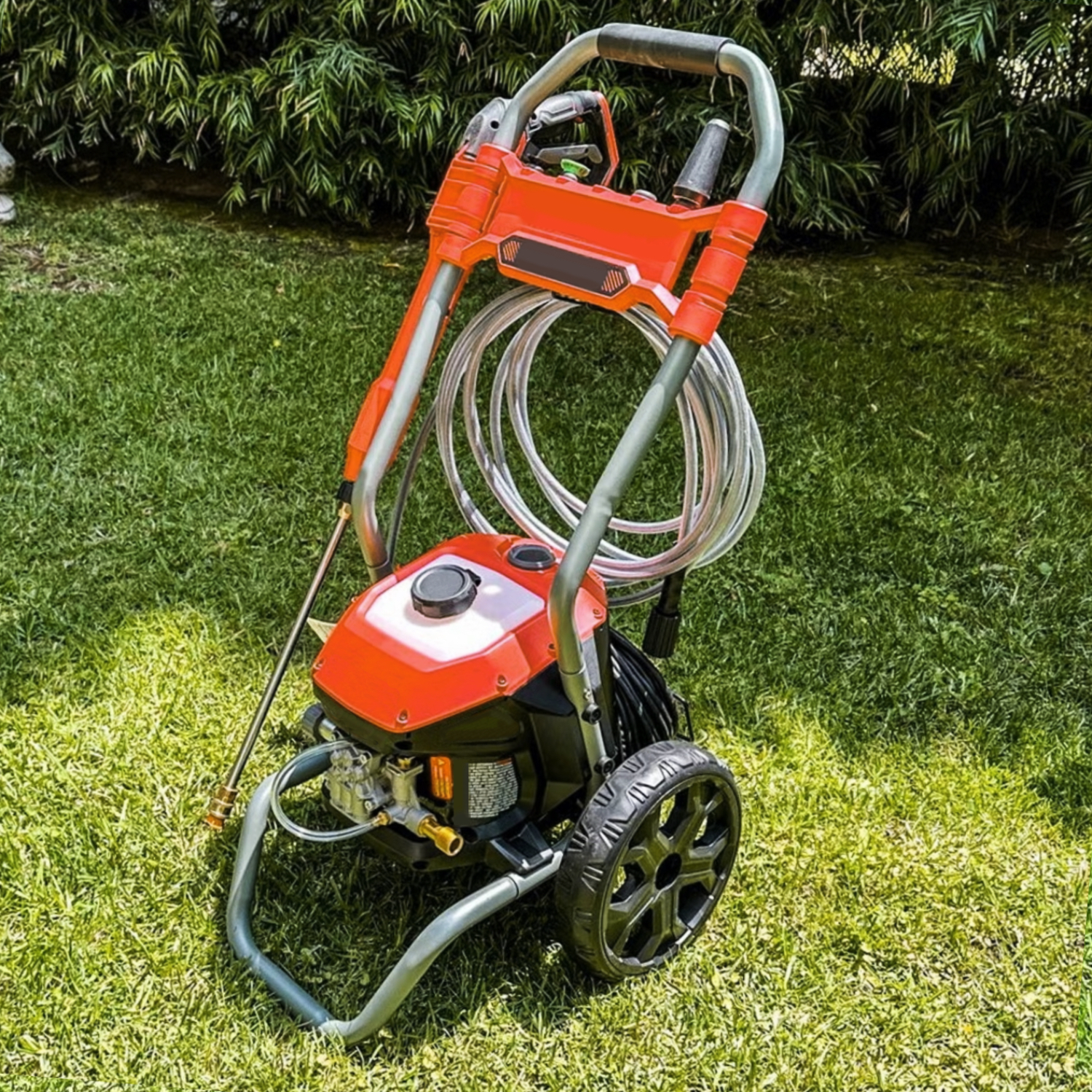
Follow this sequence to avoid damage:
Step 1: Connect Water Supply
- Attach garden hose to water inlet
- Turn water tap fully ON
- Important: Never run pump without water
Step 2: Purge Air from System
- Squeeze spray gun trigger
- Water should flow (no pressure yet)
- Run water for 30 seconds to remove all air
- Release trigger
Step 3: Start Engine
- Set choke to CLOSED (cold start)
- Set throttle to START position
- Turn fuel valve ON
- Turn ignition switch ON (if electric start)
- Pull starter cord smoothly (or press start button)
- Once started, gradually open choke
- Let engine warm up 2-3 minutes
Step 4: Test Pressure
- Squeeze trigger
- Should build to full pressure within seconds
- Release trigger
- Pressure should drop, water diverts (unloader valve)
Step 5: Test All Nozzles
- Try each spray pattern
- Check for consistent pressure
- Listen for unusual pump noises
Troubleshooting first start:
Engine won't start:
- Check fuel valve is ON
- Check choke is CLOSED
- Check spark plug connection
- Check fuel is fresh
Engine starts then dies:
- Carburetor gummed (needs cleaning)
- Old fuel (drain and replace)
- Blocked fuel filter
No pressure:
- Check water supply is ON
- Check inlet filter not blocked
- Pump may need priming
- Unloader valve may be stuck
Low pressure:
- Nozzle blocked or worn
- Air in pump (purge again)
- Worn pump seals
- Incorrect nozzle size
Pump makes noise but no pressure:
- Valves damaged (winter freeze damage likely)
- Seals failed
- Pump rebuild needed
Common Spring Startup Problems & Solutions
Problem 1: "Engine won't start at all"
Most common causes:
-
Old fuel (90% of cases)
- Solution: Drain fuel tank, add fresh fuel
- Cost: £0 / $0 / €0 / C$0 (just fuel)
-
Fouled spark plug
- Solution: Clean or replace spark plug
- Cost: £5-10 / $6-13 / €6-12 / C$9-17
- Buy spark plugs →
-
Clogged carburetor
- Solution: Clean with carburetor cleaner or rebuild
- Cost: £8-15 / $10-19 / €9-18 / C$13-26 for cleaner, £30-60 / $38-76 / €35-70 / C$51-102 for rebuild kit
- Carburetor parts →
-
Low/no oil (auto-shutoff triggered)
- Solution: Check and top up oil
- Cost: £10 / $13 / €12 / C$17 for oil
Problem 2: "No pressure from spray gun"
Diagnosis steps:
- Check water supply is ON ✓
- Purge air from pump ✓
- Check nozzle not blocked ✓
- Test different nozzles ✓
If still no pressure:
-
Worn pump seals: Water bypassing internally
- Solution: Pump seal kit
- Cost: £15-40 / $19-51 / €18-47 / C$26-68
- Pump seal kits →
-
Failed pump valves: Inlet/outlet valves not seating
- Solution: Valve kit replacement
- Cost: £20-50 / $25-63 / €23-58 / C$34-85
- Pump valve kits →
-
Cracked pump housing: Winter freeze damage
- Solution: Replace pump or housing
- Cost: £80-300 / $100-380 / €95-350 / C$135-510
- Prevention: Use pump antifreeze next winter
Problem 3: "Pressure washer leaking water"
Common leak points:
From pump:
- Worn seals (normal wear or freeze damage)
- Cracked housing (freeze damage)
- Loose fittings (vibration)
- Pump gaskets & seals →
From hose connections:
- Worn O-rings
- Loose quick-connects
- Damaged hose end
From spray gun:
- Trigger seal worn
- Gun body cracked
Quick fixes:
- Replace O-rings (£2-5 / $3-6 / €2-6 / C$3-9)
- Tighten connections with adjustable wrench
- Apply PTFE tape to threaded connections
Problem 4: "Pulsing/surging pressure"
Causes:
-
Air in pump
- Solution: Purge by squeezing trigger with water ON, engine OFF
-
Blocked inlet filter
- Solution: Clean filter screen
-
Unloader valve sticking
- Solution: Clean or replace unloader valve
- Unloader valves →
-
Worn pump
- Solution: Pump rebuild or replacement
Spring Pressure Washer Parts to Stock
Preventive parts kit (for uninterrupted season):
✅ Spark plug × 1 — Most common failure (£5-10 / $6-13 / €6-12 / C$9-17)
✅ Air filter × 1 — Replace if dirty (£8-15 / $10-19 / €9-18 / C$13-26)
✅ Pump seal kit — Covers most leaks (£15-40 / $19-51 / €18-47 / C$26-68)
✅ Spray nozzles (set) — Have backups (£10-20 / $13-25 / €12-23 / C$17-34)
✅ High-pressure hose — Have spare on hand (£25-60 / $32-76 / €29-70 / C$43-102)
✅ Fuel filter — Prevents carburetor clogs (£5-10 / $6-13 / €6-12 / C$9-17)
✅ Pump oil/saver — For next season (£8-12 / $10-15 / €9-14 / C$13-20)
Total investment: £75-170 / $95-215 / €88-200 / C$128-290 to keep you working all season
Downtime cost without spares:
- Lost work time: 3-7 days waiting for parts
- Rush delivery fees: £10-30 / $13-38 / €12-35 / C$17-51
- Lost cleaning jobs: £100-500+ / $125-630+ / €115-585+ / C$170-850+
Regional Spring Maintenance Tips
UK & Northern Europe
Timing: March-April 2026 (after last frost)
Specific concerns:
- Freeze damage to pumps (common with damp storage)
- Fuel degradation (ethanol in fuel absorbs moisture)
- Rust from damp storage conditions
Spring prep:
- Check pump thoroughly for cracks
- Drain and replace ALL fuel
- Lubricate metal parts (spray with WD-40)
Southern Europe
Timing: February-March 2026 (earlier spring)
Specific concerns:
- Dust in air filters (dry storage conditions)
- Less freeze risk
- Earlier spring cleaning demand
Spring prep:
- Focus on air filter cleaning
- Check for dust in engine cooling fins
- Service earlier (demand starts sooner)
US (Regional Variations)
Northern states: Similar to UK timing (April 2026)
Southern states: Year-round use (monthly checks instead)
Midwest: Late April/May 2026 (harsh winters)
Canada
Timing: Late April/May 2026 (longer winters)
Specific concerns:
- Severe freeze damage risk
- Shorter cleaning season (maximize uptime)
- Salt/grit buildup from winter roads
Spring prep:
- Thorough pump inspection (freeze damage common)
- Check frame for salt corrosion
- Service ASAP (short season)
Australia
Timing: September-October 2026 (opposite seasons)
Specific concerns:
- Heat damage during summer storage
- Fuel evaporation
- UV damage to hoses/plastics
Spring prep:
- Check fuel hasn't evaporated
- Inspect hoses for sun damage/cracking
- Ensure cooling system clear
Frequently Asked Questions
Do I need to service my pressure washer if I used it in winter?
Yes, especially if it's been idle for 30+ days. Check oil level, add fresh fuel or stabilizer, and inspect the pump for freeze damage. Even if stored indoors, fuel degrades and pump seals can dry out. A quick 15-minute spring check prevents breakdowns during peak season.
How often should I change pressure washer engine oil?
Every 50 hours of use or once per year, whichever comes first. If you only use your pressure washer occasionally, change oil at the start of each season. For commercial users, track hours and change every 50 hours. Always change oil if it looks dark, dirty, or has been sitting over winter.
Can I use old fuel in my pressure washer if it's only 6 months old?
No, drain it and use fresh fuel. Fuel degrades after 30-60 days, especially modern ethanol blends. Old fuel causes hard starting, rough running, and carburetor damage. The cost of fresh fuel is far cheaper than a carburetor rebuild. Add fuel stabilizer to extend fuel life to 12-24 months.
My pressure washer won't start after winter. What should I check first?
Check these in order:
- Fuel: Drain old fuel, add fresh fuel (90% of problems)
- Oil level: Top up if low (engines have auto-shutoff)
- Spark plug: Remove, check condition, clean or replace
- Air filter: Clean or replace if dirty
- Carburetor: Spray cleaner into air intake if above don't work
Most spring startup failures are fuel-related. Need more help? →
How do I know if my pressure washer pump is damaged from freezing?
Signs of freeze damage:
- Visible cracks in pump housing (look carefully at seams)
- Water leaking from pump body when running
- No pressure even with good water supply
- Milky pump oil (water contamination through cracked seals)
- Rough/grinding pump noise (damaged internal components)
If you see any of these, pump likely needs rebuilding or replacement. Pump parts available →
Should I use hot or cold water in my pressure washer?
Cold water only, unless you have a hot water pressure washer. Standard pressure washers are designed for cold water (max 40°C / 104°F). Using hot water damages seals, O-rings, and pump components. Hot water models have reinforced seals and heating elements — they cost significantly more.
What pressure washer maintenance should I do during the season?
After every use:
- Flush detergent from system (run clean water 2 minutes)
- Release pressure (squeeze trigger)
- Coil hoses properly (no kinks)
Every 10 hours:
- Check engine oil level
- Clean air filter
- Inspect hoses for damage
Every 50 hours:
- Change engine oil
- Replace air filter
- Check spark plug
- Change pump oil (if oil-lubricated)
Can I store my pressure washer outside?
Not recommended, but if you must:
- Use weatherproof cover (breathable, not plastic)
- Elevate off ground (prevents rust)
- Store in shaded area (UV damages hoses/plastics)
- Empty fuel tank completely
- Add pump antifreeze
- Remove battery (if electric start)
Best storage: Dry shed, garage, or outbuilding with ventilation.
Emergency Parts Checklist for Spring
Don't let parts shortages stop your spring cleaning:
Critical Spares to Have on Hand
Engine Parts:
- ✅ Spark plug × 2 — Replace every 100 hours
- ✅ Air filter × 1 — Replace when dirty
- ✅ Fuel filter × 1 — Replace annually
- ✅ Recoil starter × 1 — Backup for failures
Pump Parts:
- ✅ Seal kit — Fixes most leaks
- ✅ Valve kit — Fixes low pressure
- ✅ O-rings assortment — Fixes connections
Hoses & Nozzles:
- ✅ High-pressure hose — Spare for emergencies
- ✅ Nozzle set — Replace worn tips
- ✅ Quick-connect fittings — Common failure point
Consumables:
- ✅ Engine oil (correct grade for your engine)
- ✅ Pump oil (if oil-lubricated pump)
- ✅ Fuel stabilizer
- ✅ Pump antifreeze (for next winter)
Shop Complete Pressure Washer Parts Kit →
Key Takeaways: Spring Pressure Washer Maintenance
Remember these five essentials:
- ?️ Fresh fuel is critical — Drain old fuel, add new fuel (prevents 90% of problems)
- ? Check oil level — Engines seize quickly with low oil
- ? Connect water BEFORE starting — Running pump dry damages seals instantly
- ? Test spark plug — Clean or replace if fouled from winter storage
- ? Inspect pump for cracks — Freeze damage is common after cold winters
30 minutes of maintenance = reliable performance all season.
Need Pressure Washer Parts Fast?
Get Her Going Parts stocks thousands of pressure washer engine parts for fast delivery:
- ✅ All major pressure washer engine brands in stock
- ✅ Genuine and compatible replacement parts
- ✅ Expert technical support team
- ✅ Worldwide shipping (UK, Europe, USA, Canada, Australia)
Free help: Can't identify your pressure washer model? Send us a photo — our engineers will identify it and recommend the right parts.
Browse Pressure Washer Engine Parts →
Questions about your specific pressure washer? Contact us GetHerGoing.part for FREE help from an Engineer
About Gethergoing Parts
This guide was written by the Get Her Going Technical Team, specialists in small engine maintenance for outdoor small engine equipment. Gethergoing Parts supplies engine parts for pressure washers, rotovators, compactors, log splitters, and other machinery worldwide.
This information is intended as aguide nly for trained repair engineers and does not replace professional training. By using this guide you agree to our T&C. E&EO
Why Trust This Guide?
This guide was written by the Generator Guru / Gethergoing technical team, qualified engineers with over 18 years of experience supporting 100,000+ customers annually. We stock over 1 million parts and provide free repair support at generatorguru.com/need-help and gethergoing.com.


