Wood Chipper Maintenance for Tree Surgery Season: Complete Service Guide
Published by Get Her Going Technical Team on 2nd Mar 2026
Wood Chipper Maintenance for Tree Surgery Season: Complete Service Guide
Last Updated: March 2026 | Reading Time: 14 minutes
Quick Answer: 9 Essential Checks Before Chipping Season
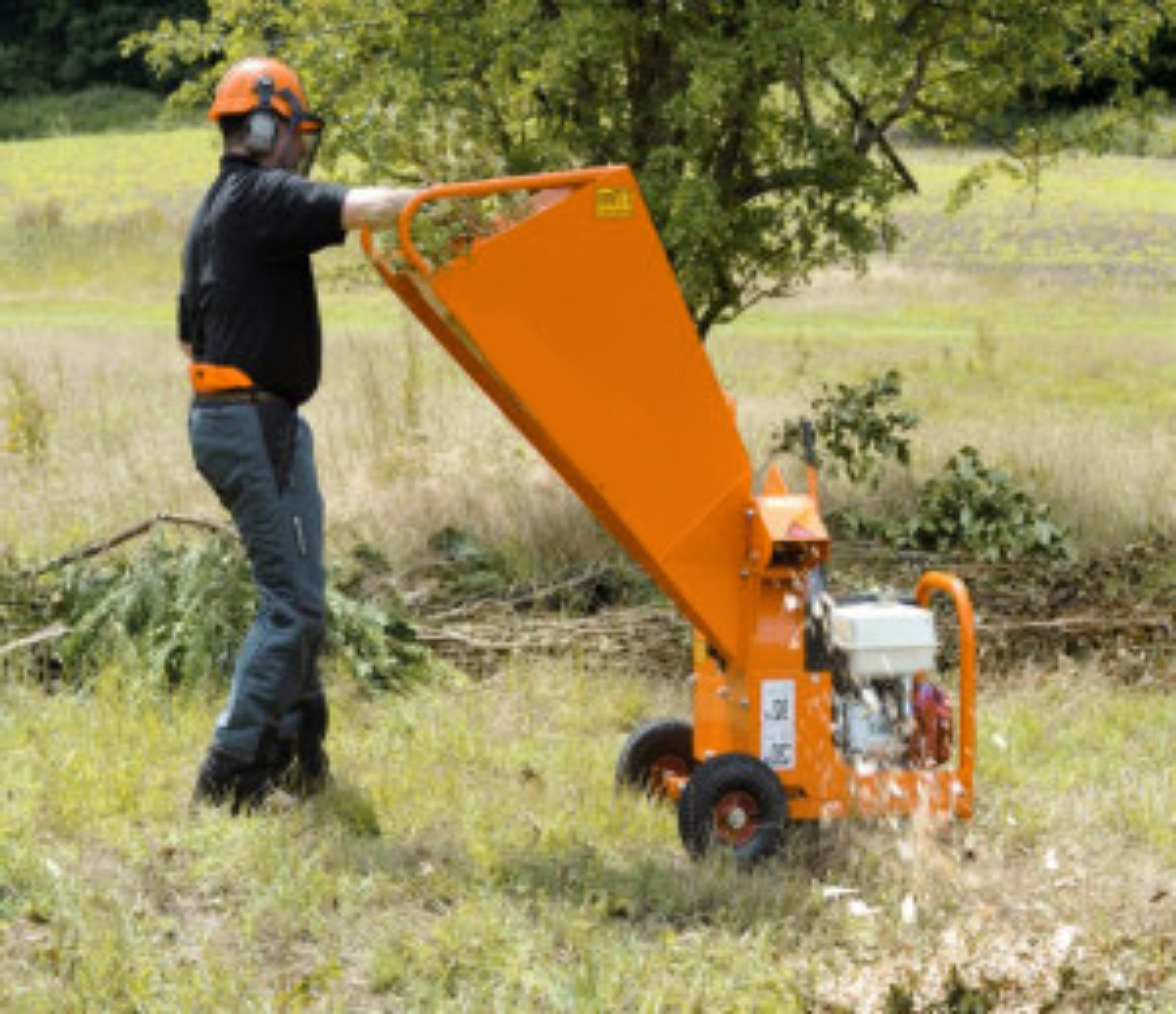
Tree surgery and landscaping season is starting. Before you chip your first branch, your wood chipper needs these critical maintenance checks:
- Check engine oil level — top up or change if dirty (high-load operation demands clean oil)
- Replace old fuel — drain stale fuel, add fresh fuel with stabilizer
- Inspect chipper blades — check sharpness, wear, and secure mounting (most critical safety check)
- Check rotor and anvil — look for cracks, wear, and damage
- Inspect drive belts — multiple belts transfer power to rotor and feed system
- Test feed roller system — rollers must grip and pull material through
- Check hydraulic system (hydraulic models) — low oil damages expensive pumps
- Inspect safety features — emergency stop bar, feed control, guards all functional
- Test discharge chute — rotates freely, discharge deflector operates smoothly
These nine steps prevent the most common wood chipper failures and ensure safe, productive chipping all tree surgery season.
Average maintenance time: 90 minutes
Parts cost (if needed): £100-300 / $125-380 / €115-350 / C$170-510
Why Wood Chipper Maintenance Matters Before Tree Surgery Season
What happens to wood chippers during winter storage:
- Fuel degrades and clogs carburetor jets (after 30-60 days)
- Chipper blades develop surface rust and become dull
- Drive belts become brittle from cold temperatures
- Feed rollers seize from sap and debris buildup
- Hydraulic seals dry out (hydraulic feed systems)
- Engine oil breaks down under heavy shock loads
- Wood fiber and sap harden on rotor and blades
- Safety mechanisms seize from lack of use
The cost of skipping maintenance:
- Chipper blade set replacement: £80-300 / $100-380 / €95-350 / C$135-510 (vs sharpening £20-60 / $25-76 / €23-70 / C$34-102)
- Rotor replacement: £400-1,200 / $505-1,520 / €470-1,400 / C$680-2,040 (vs inspection £0)
- Drive belt set: £60-150 / $76-190 / €70-175 / C$102-255 (vs inspection £0)
- Hydraulic pump repair: £500-1,200 / $630-1,520 / €585-1,400 / C$850-2,040 (vs oil check £25 / $32 / €29 / C$43)
- Carburetor rebuild: £80-150 / $100-190 / €95-175 / C$135-255 (vs fresh fuel £8 / $10 / €9 / C$13)
- Lost work time: 5-10 days waiting for parts during peak tree surgery season
Bottom line: Tree surgeons know — wood chipper downtime stops entire crew operations. 90 minutes of maintenance prevents expensive breakdowns and serious injuries.
When to Service Your Wood Chipper for Tree Surgery Season
Regional Tree Surgery Season Timing:
UK & Ireland:
- Service: Late March to April
- Tree surgery season: April-October (peak: May-September)
- Storm cleanup: Year-round (maintain readiness)
Northern Europe:
- Service: April
- Tree surgery season: May-October
- Shorter season (equipment reliability critical)
Southern Europe:
- Service: February-March
- Extended season: March-November
- Year-round work in warmest regions
US & Canada (varies by region):
- Northern states/provinces: Service April-May
- Southern states: Service March (year-round in some areas)
- Midwest: Service mid-April
- Hurricane season prep: May-June (coastal areas)
Australia:
- Service: August-September (opposite seasons)
- Bushfire cleanup: Extended season (year-round readiness)
Key indicator: Service wood chipper before first major tree removal projects and storm cleanup season
Spring Wood Chipper Maintenance Checklist
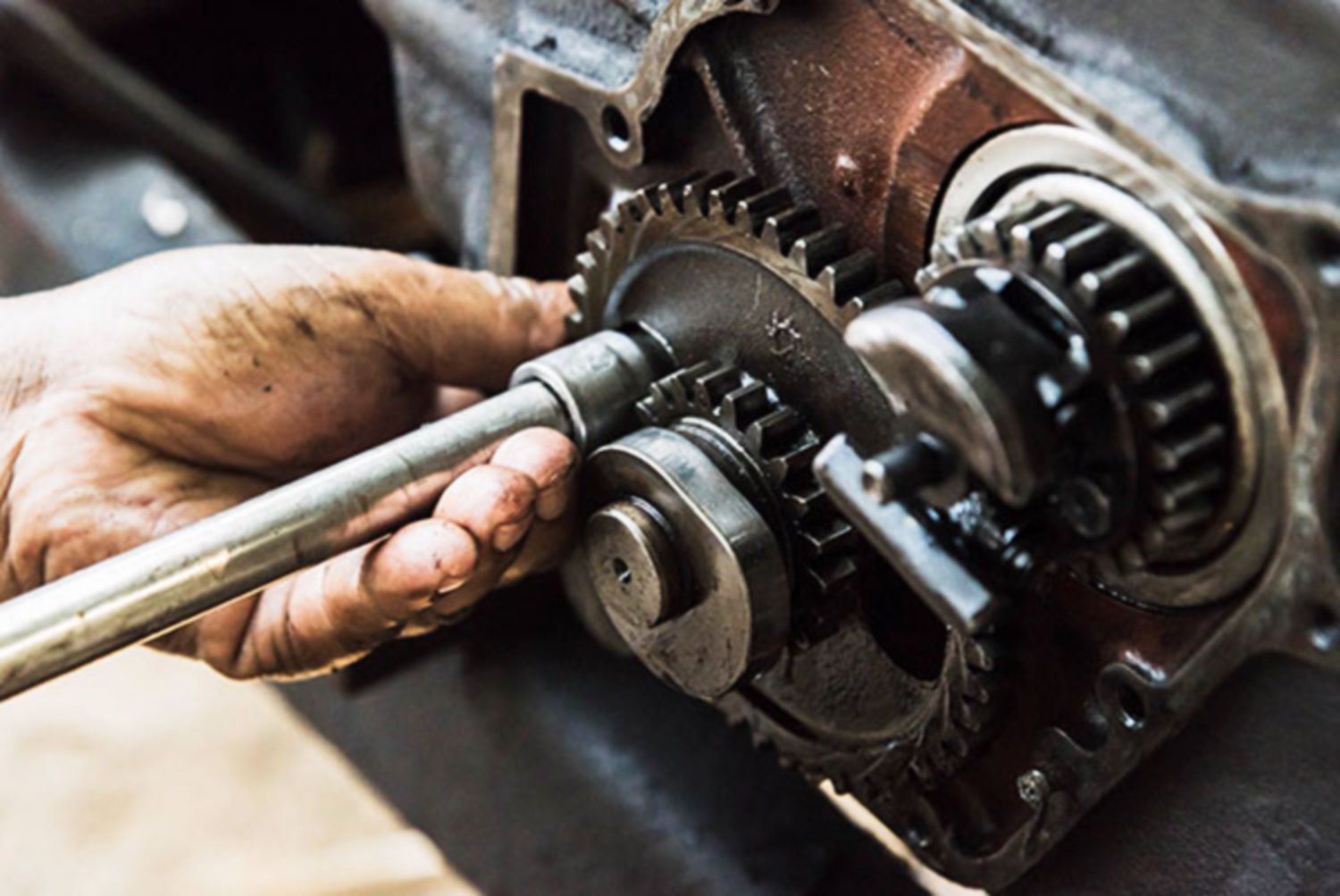
Step 1: Visual Inspection (15 minutes)
Before starting the engine, thoroughly inspect:
Chipper Rotor & Blades:
- ✅ All chipper blades present (typically 2-4 blades)
- ✅ Blades secure in rotor (bolts tight)
- ✅ No cracks in rotor disc
- ✅ Rotor spins freely by hand (no obstruction)
- ✅ No material jammed in chipping chamber
- ✅ Anvil secure and undamaged
Feed System:
- ✅ Feed rollers intact (not damaged)
- ✅ Roller surfaces not worn smooth
- ✅ Feed chute clear of debris
- ✅ Feed control lever operates smoothly
- ✅ Feed reversal mechanism functional (critical safety feature)
Frame & Structure:
- ✅ Frame welds for cracks (high-stress equipment)
- ✅ Towbar secure and undamaged (towable models)
- ✅ Wheels inflated and bearings good
- ✅ All guards and covers in place
- ✅ Emergency stop bar functional (test before operation)
Drive System:
- ✅ All drive belts visible through guards
- ✅ Belts not cracked, glazed, or frayed
- ✅ Belt tensioners functioning
- ✅ Pulleys aligned and undamaged
- ✅ No missing belt guards
Hydraulic System (if fitted):
- ✅ Hydraulic reservoir oil level
- ✅ No visible leaks from hoses or fittings
- ✅ Hydraulic hoses not cracked or abraded
- ✅ Hydraulic pump secure
- ✅ Control valves operate smoothly
Engine Exterior:
- ✅ Fuel tank secure, cap seals
- ✅ Air filter housing intact
- ✅ Throttle cable moves freely
- ✅ Exhaust/muffler secure
- ✅ Cooling fins clear of debris
Safety Features (CRITICAL):
- ✅ Emergency stop bar present and functional
- ✅ Feed control bar returns to neutral
- ✅ All safety decals legible
- ✅ Discharge chute guard in place
- ✅ Feed opening guards secure
Red flags requiring immediate attention:
- Missing or loose chipper blades (catastrophic failure risk)
- Cracked rotor (can explode at operating speed)
- Missing feed reversal mechanism (serious injury risk)
- Non-functional emergency stop (illegal to operate)
- Missing discharge chute guard (flying debris hazard)
Step 2: Engine Oil Check and Change (10 minutes)
Wood chipper engines work under extreme shock loads — oil quality is critical.
How to check engine oil:
- Place chipper on level ground
- Clean area around oil filler cap
- Remove dipstick and wipe clean
- Reinsert fully without screwing in (or screw in, depending on type)
- Remove and check level
What to look for:
- Low oil: Top up immediately (engines seize under shock loads)
- Very dark/black oil: Normal after heavy use — change if over 6 months old
- Milky appearance: Water/coolant contamination
- Gritty texture: Metal particles (bearing wear)
- Burnt smell: Oil overheated (change immediately)
- Thin consistency: Oil breakdown from heat and shock loads
Recommended oil for wood chippers:
Heavy-duty shock load operation:
- 15W-40 for warm weather (most common)
- 10W-40 for variable spring temperatures
- 10W-30 for cooler spring weather
- 20W-50 for very hot summer operation
Important: Wood chippers experience sudden shock loads when large branches engage — use quality oil rated for heavy-duty service
Oil change procedure:
- Run engine 2-3 minutes to warm oil
- Turn engine OFF
- Place drain pan under engine
- Remove drain plug (typically 17mm, 19mm, or 22mm)
- Drain completely (may take 10-15 minutes)
- Replace drain plug with new washer if available
- Refill with correct grade and amount (check manual — typically 1.0-2.0L depending on engine size)
- Check level with dipstick
- Dispose of old oil properly
Oil change interval: Every 50 hours OR at start of season (whichever first)
Critical: Check oil level every 5-10 hours during chipping season (shock loads increase consumption)
Step 3: Fuel System Service (10 minutes)
Old fuel causes most wood chipper startup problems.
Fuel system service:
If fuel is 3+ months old (always at spring service):
- Turn fuel tap to OFF
- Disconnect fuel line from carburetor
- Drain into approved container
- Inspect fuel tank interior for rust, debris, or water
- If contaminated: remove tank, clean thoroughly, dry completely
- Reconnect fuel line
- Fill with fresh fuel
- Add fuel stabilizer (extends life 12-24 months)
- Turn fuel tap ON
Fuel filter replacement:
- Replace inline fuel filter annually
- Cost: £5-12 / $6-15 / €6-14 / C$9-20
Carburetor service (if engine won't start):
Symptoms of dirty carburetor:
- Engine cranks but won't fire
- Starts briefly then dies immediately
- Runs only with choke fully closed
- Rough running, lacks power
- Black smoke (too rich)
- Surging or hunting under load
Quick cleaning:
- Remove air filter
- Spray carburetor cleaner into air intake while cranking
- Let penetrate 10-15 minutes
- Reinstall air filter
- Try starting normally
If cleaning doesn't work: Full carburetor rebuild needed
Wood chipper carburetors in stock →
Step 4: Air Filter Service (5 minutes)
Wood chippers operate in dusty conditions — air filter maintenance is critical.
Why air filters matter on wood chippers:
- Wood dust generated during chipping
- Operate outdoors in dusty conditions
- Long operating hours
- Clogged filter causes power loss under load
How to service air filter:
Foam filters (most common):
- Remove air filter cover
- Remove foam element
- Inspect for tears, degradation, hardening
- If damaged: replace
- If serviceable: wash in warm soapy water
- Rinse thoroughly until water runs clear
- Squeeze dry (don't wring)
- Apply foam filter oil or SAE 30 engine oil
- Squeeze to distribute oil evenly (damp, not dripping)
- Reinstall when properly oiled
Paper filters (some models):
- Remove from housing
- Tap gently to dislodge dust
- Do NOT use compressed air on small chipper filters (damages media)
- Hold to light — should see through
- If very dirty: replace
- Never wash paper filters
Dual element filters:
- Service foam pre-filter (wash and oil)
- Check paper main filter (replace if dirty)
- Both elements must be installed
Service interval for wood chippers:
- Check: Every 10 hours
- Clean: Every 25 hours
- Replace paper elements: Every 100 hours or annually
- Replace foam elements: When degraded
Wood chipper air filters available →
Step 5: Spark Plug Check (5 minutes)
Reliable ignition under shock loads.
How to inspect spark plug:
- Disconnect spark plug lead (pull boot, not wire)
- Clean around spark plug base
- Use spark plug wrench (usually 16mm, 19mm, or 21mm)
- Remove plug carefully
- Inspect electrode and insulator
Spark plug condition guide:
GOOD condition:
- Light tan/grey color
- Minimal electrode wear
- Clean ceramic insulator
- Gap 0.6-0.8mm / 0.024-0.031"
REPLACE if:
- Black/sooty: Rich mixture or old fuel
- Wet with fuel: Flooded or carburetor issue
- White/blistered: Running too hot
- Oily: Oil entering combustion chamber
- Eroded electrode: Normal wear after 100 hours
- Cracked insulator: Failed
Spark test:
- Reconnect lead to removed plug
- Hold threads against engine block (grounded)
- Pull starter cord briskly
- Should see bright blue spark
- Weak orange or no spark: Replace plug
Replacement:
- Cost: £6-15 / $8-19 / €7-18 / C$10-26
- Replace annually or every 100 hours
Wood chipper spark plugs in stock →
Step 6: Chipper Blade Inspection and Sharpening (30 minutes)
THE MOST CRITICAL CHECK — blade condition determines chipping effectiveness and safety.
How wood chipper blades work:
- Heavy steel blades (typically 2-4 per rotor)
- Bolted to rotor disc
- Rotor spins at 1,500-3,000 RPM
- Blades slice wood against anvil
- Material discharged through chute
Chipper blade inspection:
Safety first:
- Disconnect spark plug lead
- Lock feed rollers (prevent accidental feeding)
- Wear heavy gloves
- Never reach into chipper with engine running
What to inspect:
Blade condition:
- ✅ Cutting edge sharpness
- ✅ No cracks in blade body
- ✅ Mounting holes not elongated
- ✅ Blade not bent or twisted
- ✅ Even wear across cutting edge
Blade mounting:
- ✅ All mounting bolts tight (use wrench to check)
- ✅ Lock washers present on all bolts
- ✅ Bolts not damaged or stripped
- ✅ Correct torque (critical — loose blade can detach)
Blade wear indicators:
New blade: Sharp, defined cutting edge, full blade thickness
Serviceable blade: Slight rounding but still cuts effectively
Worn blade: Edge rounded significantly, blade thinned from sharpening
Replace when:
- Blade thickness reduced 30%+
- Cracks visible
- Bent or twisted
- Cutting edge too rounded to sharpen effectively
When to sharpen chipper blades:
Symptoms of dull blades:
- Material not chipping cleanly (producing strips instead of chips)
- Engine bogs down more than usual
- Increased fuel consumption
- Louder operation
- Material jamming more frequently
Sharpening frequency:
- Professional use: Every 8-16 hours of operation
- Homeowner use: Every season or 25-50 hours
- After hitting rocks/metal: Immediately inspect and sharpen
How to sharpen chipper blades:
Tools needed:
- Angle grinder with grinding disc OR
- Metal file (slower but works)
- Safety glasses
- Work gloves
- Torque wrench (for reinstallation)
Sharpening procedure:
-
Remove blades:
- Disconnect spark plug lead
- Lock rotor so it can't turn
- Remove blade mounting bolts (usually 13mm, 17mm, or 19mm)
- Remove blades carefully (heavy)
- Mark blade position and orientation
-
Clean blades:
- Wire brush off sap, wood fiber, rust
- Inspect for hidden cracks
-
Sharpen cutting edge:
- Secure blade in vise
- Maintain original bevel angle (typically 30-40°)
- Grind from top side (bevel side)
- Make smooth, even passes along entire edge
- Remove nicks and damage
- Don't overheat blade (causes loss of temper)
- Cool in water if blade gets hot
- Remove equal amounts from each blade (maintain rotor balance)
-
Check balance (CRITICAL):
- If chipper has 2 blades: weigh both (should be within 10 grams)
- If unbalanced: remove metal from heavy blade
- Unbalanced rotor causes severe vibration and bearing damage
-
Reinstall blades:
- Ensure correct orientation (cutting edge faces rotation direction)
- Install all bolts with lock washers
- Tighten to proper torque (check manual — typically 60-100 Nm / 45-75 ft-lbs)
- Verify blade doesn't hit anvil (small clearance gap required)
- Reconnect spark plug lead
Blade replacement cost: £20-80 / $25-100 / €23-95 / C$34-136 per blade (£80-300 / $100-380 / €95-350 / C$135-510 for set)
Professional sharpening service: £20-60 / $25-76 / €23-70 / C$34-102 (often includes balancing)
Replacement chipper blades available →
Step 7: Rotor and Anvil Inspection (10 minutes)
Rotor and anvil work together to chip wood.
Rotor inspection:
What to check:
- ✅ No cracks in rotor disc (catastrophic failure if cracks present)
- ✅ Rotor spins freely (no binding)
- ✅ Bearings smooth (no grinding noise)
- ✅ No excessive play on shaft (worn bearings)
- ✅ Blade mounting points undamaged
Rotor bearing check:
- Manually spin rotor (engine OFF, spark plug disconnected)
- Should rotate smoothly with minimal resistance
- Listen for grinding, clicking, or rumbling
- Check for side-to-side play (grab rotor and try to move perpendicular to shaft)
- Maximum acceptable play: 1-2mm
Warning signs of rotor problems:
- Cracks in rotor disc (STOP USING IMMEDIATELY)
- Excessive vibration during operation
- Loud grinding or rumbling from bearings
- Rotor wobbles when spinning
- Metal shavings around bearings
Anvil inspection:
The anvil provides the cutting surface against which blades slice wood.
What to check:
- ✅ Anvil not cracked or broken
- ✅ Cutting surface not excessively worn (grooved)
- ✅ Anvil mounting secure
- ✅ Correct gap between blade and anvil (typically 1-3mm / 0.04-0.12")
- ✅ Anvil adjustment works (if adjustable)
Anvil wear patterns:
New anvil: Flat, even surface
Serviceable anvil: Slight wear grooves
Worn anvil: Deep grooves, material loss
Replace when:
- Blade-to-anvil gap exceeds 5mm (poor chipping)
- Deep grooves causing material to jam
- Cracks visible in anvil
Blade-to-anvil gap adjustment:
Critical for proper chipping:
- Gap too small: Blades hit anvil (damage, sparks)
- Gap too large: Material not cut cleanly (tears instead of chips)
- Correct gap: 1-3mm (about thickness of credit card)
How to adjust (varies by model):
- Loosen anvil mounting bolts
- Slide or rotate anvil to adjust gap
- Check gap around entire rotor rotation
- Re-tighten bolts when correct
Rotor replacement cost: £400-1,200 / $505-1,520 / €470-1,400 / C$680-2,040
Anvil replacement cost: £60-200 / $76-250 / €70-235 / C$102-340
Step 8: Drive Belt Inspection (15 minutes)
Wood chippers typically have multiple belts — all must be inspected.
Drive belt system:
- Engine to rotor belt(s): Main power transfer (1-3 belts)
- Engine to hydraulic pump belt (hydraulic models)
- Feed system belt (if belt-driven feed)
Belt inspection procedure:
For EACH belt, check:
- ✅ Cracks on inside surface
- ✅ Glazed/shiny surface (slipping)
- ✅ Frayed edges
- ✅ Missing chunks or pieces
- ✅ Oil contamination (clean and find leak)
- ✅ Proper tension (10-15mm / 0.4-0.6" deflection)
- ✅ Pulleys aligned (belts run straight)
Belt tension check:
For each belt:
- Press belt midpoint between pulleys
- Should deflect 10-15mm / 0.4-0.6"
- Too loose: slips under load (poor chipping, feed system issues)
- Too tight: bearing wear, premature belt failure
Belt adjustment:
Most chippers use one of these methods:
Type 1 (idler pulleys):
- Loosen idler pulley mounting bolts
- Move idler to adjust tension
- Recheck tension
- Re-tighten bolts
Type 2 (engine position):
- Loosen engine mounting bolts
- Slide engine to adjust belt tension
- Re-tighten bolts
When to replace drive belts:
- Any visible cracks
- Glazed surface
- Frayed edges
- Oil contaminated (if can't clean source)
- Over 3 years old
- Rotor slows under load (slipping)
Belt replacement cost: £15-50 / $19-63 / €18-58 / C$26-85 per belt (£60-150 / $76-190 / €70-175 / C$102-255 for full set)
Important: Replace belts in sets if possible (matched wear, balanced power transfer)
Wood chipper drive belts available →
Step 9: Feed System Inspection (15 minutes)
Feed system pulls material into chipper — critical for safe operation.
Feed roller types:
Hydraulic feed:
- Hydraulic motor drives rollers
- Consistent, powerful grip
- Feed reversal for clearing jams
Belt-driven feed:
- Engine belt drives rollers through clutch
- Mechanical simplicity
- Lower power than hydraulic
Manual feed:
- No powered feed (rare on modern chippers)
- Operator pushes material
Feed roller inspection:
What to check:
Roller condition:
- ✅ Roller surface not smooth (needs texture to grip)
- ✅ No damaged teeth or lugs
- ✅ Rollers spin freely (not seized)
- ✅ No excessive buildup of sap or debris
Feed operation:
- ✅ Feed control lever engages/disengages smoothly
- ✅ Feed reversal works (CRITICAL safety feature)
- ✅ Rollers grip test material firmly
- ✅ No slipping under light load
Feed system hydraulics (hydraulic models):
- ✅ Hydraulic hoses intact
- ✅ No leaks at fittings
- ✅ Hydraulic oil level correct
- ✅ Feed speed control works (if variable)
Cleaning feed rollers:
- Remove buildup with stiff brush
- Clean sap with solvent (diesel, mineral spirits)
- Never grease rollers (reduces grip)
- Ensure teeth/lugs are clear
Feed roller adjustment:
Roller gap adjustment (some models):
- Adjust gap for material size being chipped
- Too tight: Won't accept material
- Too loose: Material slips, doesn't feed
- Typical gap: 25-100mm (1-4") depending on model
Step 10: Hydraulic System Check (If Fitted) (10 minutes)
Not all chippers are hydraulic — skip if yours is belt-drive only.
Hydraulic wood chippers use:
- Hydraulic pump (driven by engine)
- Hydraulic motor(s) (drive feed rollers)
- Hydraulic oil reservoir
- Hoses and control valves
Hydraulic oil level check:
Critical — low oil damages pump:
- Locate hydraulic reservoir (usually on frame)
- Clean area around dipstick/sight glass
- Check oil level (should be between MIN and MAX)
- Top up if low with correct hydraulic oil
Hydraulic oil type:
- Most common: ISO VG 46 hydraulic oil
- Cold weather: ISO VG 32
- Hot weather: ISO VG 68
- Check manual for exact specification
Hydraulic oil condition:
- Good: Clear or amber, smooth
- Bad (change immediately):
- Milky (water contamination)
- Black (debris contamination)
- Burnt smell (overheating)
- Very thick (old, degraded)
Hydraulic hose inspection:
Check all hoses for:
- ✅ Cracks or abrasion
- ✅ Leaks at fittings
- ✅ Bulging (internal damage)
- ✅ Hardening (age degradation)
- ✅ Proper routing (not rubbing or pinched)
Hydraulic leak check:
- Start engine
- Engage feed system
- Inspect all hoses, fittings, pump for leaks
- Any leak = stop and repair immediately
Hydraulic oil change interval: Every 500 hours or every 2 years
Cost: £50-150 / $63-190 / €58-175 / C$85-255
Warning: Low hydraulic oil destroys pump (£500-1,200 / $630-1,520 / €585-1,400 / C$850-2,040 replacement)
Step 11: Safety Feature Inspection (10 minutes)
Wood chippers are extremely dangerous — safety features MUST work.
Critical safety features to test:
1. Emergency stop bar:
- Located across feed chute opening
- When pushed, immediately stops feed and rotor
- Test: Push bar — everything should stop within seconds
- Non-functional = DO NOT OPERATE
2. Feed control lever:
- Controls feed roller engagement
- Must return to neutral when released
- Test: Engage feed, release lever — feed should stop
- Spring return mechanism must work
3. Feed reversal:
- Allows operator to reverse material out if jamming
- Test: Engage reverse — rollers should rotate backward
- Critical for clearing jams safely
4. Discharge chute guard:
- Prevents debris from flying out at operator level
- Must be secure and intact
- Missing guard = DO NOT OPERATE
5. Feed chute guards:
- Prevent access to rotor while feeding
- Must be in place and secure
- Missing guards = serious injury risk
6. Safety decals:
- Warning labels must be legible
- Replace faded or missing decals
- Cost: £5-15 / $6-19 / €6-18 / C$9-26 per decal
Legal requirement: Many jurisdictions require all safety features functional before operation
Step 12: First Start Procedure (After Maintenance)
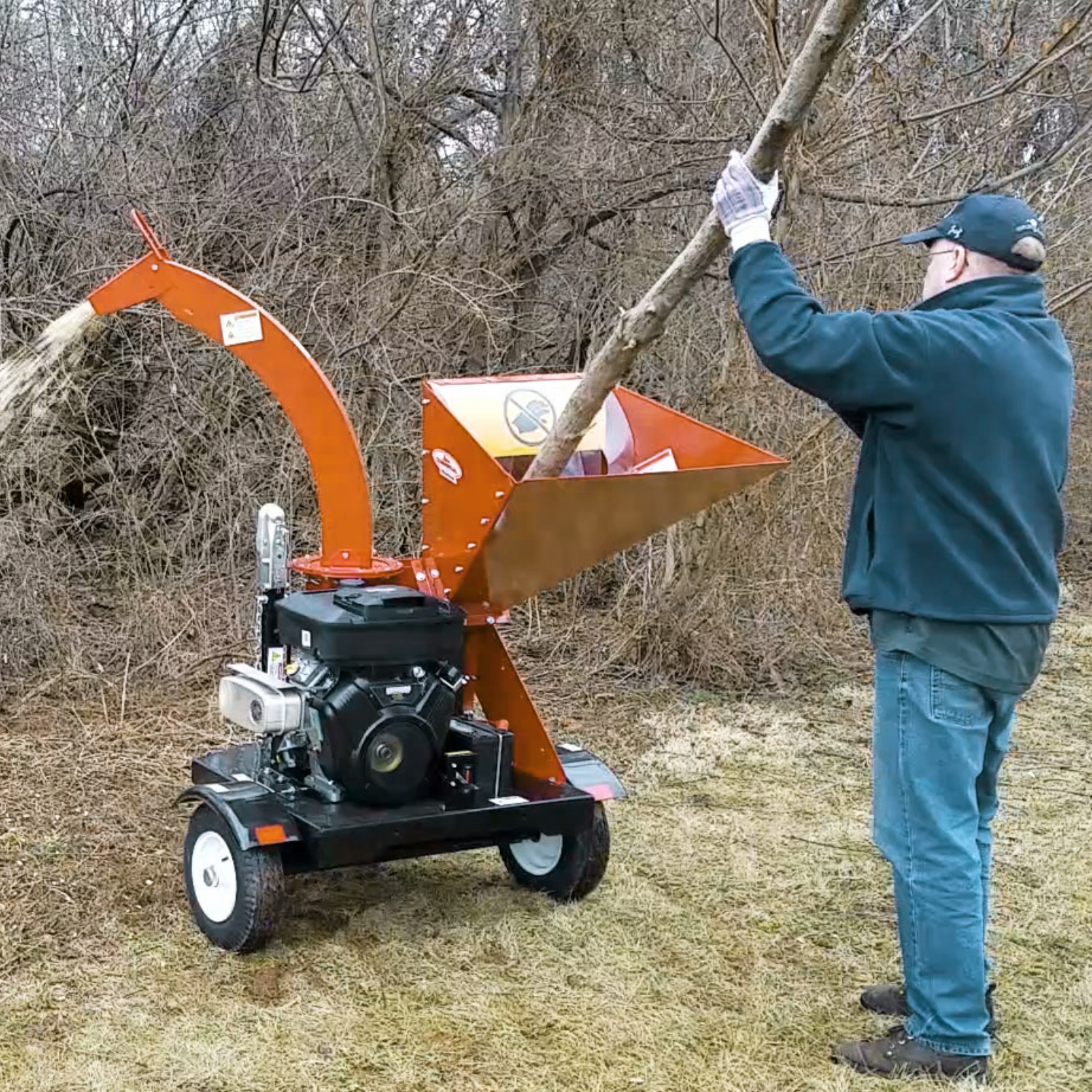
Safe startup sequence:
Pre-start checks:
- ✅ Engine oil at correct level
- ✅ Hydraulic oil at correct level (if hydraulic)
- ✅ Fresh fuel in tank
- ✅ Air filter clean and installed
- ✅ Spark plug tight and connected
- ✅ All chipper blades tight and balanced
- ✅ All guards in place
- ✅ Emergency stop bar functional
- ✅ Clear area around chipper (3-meter radius)
- ✅ Discharge chute pointed away from people/property
Starting procedure:
- Place chipper on level ground
- Engage parking brake (towable models)
- Turn fuel tap ON
- Close choke (cold engine)
- Set throttle to START
- Ensure feed control in NEUTRAL
- Pull starter cord smoothly
- Once started, gradually open choke
- Let engine warm 5 minutes before chipping
Test rotor and feed system:
- Increase throttle slowly to operating speed (typically 2,500-3,000 RPM)
- Listen for unusual noises (grinding, rattling, squealing)
- Check for excessive vibration
- Test emergency stop bar (everything should stop immediately)
- Engage feed system (no load) — rollers should rotate smoothly
- Test feed reversal — rollers should reverse
- Return feed control to neutral
Troubleshooting first start:
Engine won't start:
- Fuel tap ON
- Choke fully CLOSED
- Fresh fuel
- Spark plug connected
- Check out Interactive Repair Guide to Troubleshoot further
Excessive vibration:
- Blades not balanced
- Rotor damaged
- Bearing failure
- Material jammed in chipper
Feed system won't engage:
- Drive belt broken/slipped
- Hydraulic system issue (hydraulic models)
- Feed clutch not engaging
Unusual noises:
- Blade hitting anvil (gap too small)
- Bearing failure
- Loose components
- Material jammed in chipping chamber
Common Wood Chipper Problems & Solutions
Problem 1: "Wood chipper won't chip effectively / produces strips instead of chips"
Most common operational complaint.
Diagnosis checklist:
1. Dull chipper blades (90% of cases):
- Symptom: Material tears/strips instead of clean chips
- Check: Inspect blade cutting edges
- Solution: Sharpen or replace blades
- Cost: £20-60 / $25-76 / €23-70 / C$34-102 (sharpening), £80-300 / $100-380 / €95-350 / C$135-510 (replacement set)
- Chipper blades →
2. Blade-to-anvil gap too large:
- Symptom: Material passes through without being cut cleanly
- Check: Gap should be 1-3mm
- Solution: Adjust anvil position
- Cost: £0
3. Rotor speed too slow:
- Symptom: Blades don't have enough speed to cut cleanly
- Check: Engine RPM, drive belts
- Solution: Increase throttle or replace slipping belts
- Cost: £15-50 / $19-63 / €18-58 / C$26-85 per belt
4. Wrong material type:
- Issue: Green wood chips differently than dry wood
- Solution: Adjust expectations or technique
- Cost: £0
Problem 2: "Wood chipper keeps jamming"
Frustrating and time-consuming.
Common causes:
1. Feeding too fast:
- Issue: Overloading chipper capacity
- Solution: Feed material slower, let chipper work at its pace
- Cost: £0
2. Material too large:
- Check: Maximum rated diameter (usually 50-150mm / 2-6")
- Solution: Cut large branches to acceptable size
- Cost: £0
3. Dull blades:
- Symptom: Can't cut efficiently, material backs up
- Solution: Sharpen blades
- Cost: £20-60 / $25-76 / €23-70 / C$34-102
4. Feed rollers not gripping:
- Check: Roller surfaces worn smooth or contaminated
- Solution: Clean or replace rollers
- Cost: £40-150 / $50-190 / €47-175 / C$68-255 per roller
5. Anvil gap incorrect:
- Check: Blade-to-anvil clearance
- Solution: Adjust anvil
- Cost: £0
Problem 3: "Excessive vibration"
Indicates serious problems — stop immediately.
Causes:
1. Unbalanced chipper blades:
- Symptom: Vibration increases with rotor speed
- Check: Weigh blades (should be within 10 grams)
- Solution: Remove metal from heavier blade or replace blade
- Cost: £20-80 / $25-100 / €23-95 / C$34-136 per blade
2. Damaged rotor:
- Symptom: Severe vibration, visible wobble
- Check: Spin rotor and watch for wobble
- Solution: Replace rotor (cannot be repaired safely)
- Cost: £400-1,200 / $505-1,520 / €470-1,400 / C$680-2,040
3. Worn rotor bearings:
- Symptom: Grinding noise with vibration
- Check: Play test, rotation smoothness
- Solution: Replace bearings
- Cost: £60-200 / $76-250 / €70-235 / C$102-340
4. Material jammed in rotor:
- Symptom: Sudden vibration during operation
- Solution: Stop, clear jam
- Cost: £0
5. Loose mounting bolts:
- Symptom: Rattling, inconsistent vibration
- Check: All engine, rotor, and frame mounting bolts
- Solution: Tighten all bolts
- Cost: £0
Problem 4: "Feed system won't pull material through"
Makes chipping difficult or impossible.
Belt-driven feed systems:
1. Feed belt slipping:
- Check: Belt condition and tension
- Solution: Adjust tension or replace belt
- Cost: £15-40 / $19-51 / €18-47 / C$26-68
2. Feed clutch not engaging:
- Check: Clutch mechanism
- Solution: Adjust or repair clutch
- Cost: £30-100 / $38-126 / €35-116 / C$51-170
Hydraulic feed systems:
1. Low hydraulic pressure:
- Check: Hydraulic oil level
- Solution: Top up oil
- Cost: £25-60 / $32-76 / €29-70 / C$43-102
2. Worn hydraulic pump:
- Symptom: Pump whining, weak feed
- Solution: Rebuild or replace pump
- Cost: £500-1,200 / $630-1,520 / €585-1,400 / C$850-2,040
All feed systems:
1. Worn feed rollers:
- Symptom: Rollers spin but don't grip
- Solution: Roughen or replace rollers
- Cost: £40-150 / $50-190 / €47-175 / C$68-255 per roller
2. Roller gap incorrect:
- Check: Gap adjustment
- Solution: Adjust gap for material size
- Cost: £0
Problem 5: "Engine bogs down when chipping"
Indicates overloading or mechanical problems.
Causes:
1. Feeding too fast:
- Issue: Exceeding chipper capacity
- Solution: Feed slower
- Cost: £0
2. Dull blades:
- Issue: More power needed to cut with dull blades
- Solution: Sharpen blades
- Cost: £20-60 / $25-76 / €23-70 / C$34-102
3. Engine lacks power:
- Check: Air filter, spark plug, carburetor
- Solution: Service engine
- Cost: Varies
4. Drive belts slipping:
- Check: Belt tension and condition
- Solution: Adjust or replace belts
- Cost: £15-50 / $19-63 / €18-58 / C$26-85 per belt
Wood Chipper Parts to Stock for Tree Surgery Season
Essential spares for uninterrupted chipping:
Engine Parts:
- ✅ Spark plug × 2 — £6-15 / $8-19 / €7-18 / C$10-26 each
- ✅ Air filter × 3 — £10-20 / $13-25 / €12-23 / C$17-34 each
- ✅ Fuel filter × 2 — £5-12 / $6-15 / €6-14 / C$9-20 each
- ✅ Recoil starter × 1 — £30-80 / $38-100 / €35-95 / C$51-136
Chipper Blades (CRITICAL — always have spare set):
- ✅ Chipper blades × 1 complete set — £80-300 / $100-380 / €95-350 / C$135-510
- ✅ Blade mounting bolts × full set with lock washers — £10-30 / $13-38 / €12-35 / C$17-51
Drive System:
- ✅ Drive belt set × 1 — £60-150 / $76-190 / €70-175 / C$102-255
- ✅ Individual belts × 1 each type — £15-50 / $19-63 / €18-58 / C$26-85 each
Hydraulic (if fitted):
- ✅ Hydraulic oil × 10L — £50-120 / $63-150 / €58-140 / C$85-204
- ✅ Hydraulic filter × 1 — £15-50 / $19-63 / €18-58 / C$26-85
Safety:
- ✅ Safety decals (replace faded ones) — £5-15 / $6-19 / €6-18 / C$9-26 each
Consumables:
- ✅ Engine oil (15W-40) × 5L
- ✅ Fuel stabilizer × 1 bottle
- ✅ Multi-purpose grease × 2 tubes
- ✅ Thread lock compound (for blade bolts) × 1 bottle
Tools (keep with chipper):
- ✅ Torque wrench (for blade bolts)
- ✅ Socket set for blade removal
- ✅ Wire brush (cleaning)
- ✅ Angle grinder (field sharpening if needed)
Total emergency kit: £300-600 / $380-760 / €350-700 / C$510-1,020
Cost of wood chipper downtime:
- Lost revenue: £300-800 / $380-1,010 / €350-935 / C$510-1,360 per day (tree surgery crew idle)
- Can't complete tree removal jobs
- Customer dissatisfaction
- Equipment hire costs
- Rush parts delivery: £30-80 / $38-100 / €35-95 / C$51-136
Professional Wood Chipping Techniques
Maximize productivity, safety, and equipment life:
Before You Chip:
1. Survey the material:
- Check for hidden metal (nails, wire, screws)
- Look for rocks, dirt on branches
- Identify wood type (hardwood vs softwood)
- Assess branch diameter and length
2. Clear the work area:
- Establish safe zone (minimum 3-meter radius)
- Position chipper on level, stable ground
- Point discharge chute away from people/property
- Ensure clear escape routes
3. PPE requirements (MANDATORY):
- ✅ Safety glasses or face shield
- ✅ Hearing protection (muffs or plugs)
- ✅ Heavy work gloves
- ✅ Steel-toe boots
- ✅ Long pants and long sleeves
- ✅ High-visibility vest
- ✅ Hard hat (if chipping under trees)
Chipping Technique:
Material preparation:
- Remove side branches (feed clean trunks/branches)
- Cut to manageable lengths (1.5-2m / 5-6ft)
- Group similar sizes together
- Check maximum diameter rating (don't exceed)
Feeding technique:
Correct method:
- Feed butt end (thick end) first
- Feed branches at slight angle (not perpendicular)
- Let feed rollers pull material (don't force)
- Feed one piece at a time (don't bundle)
- Stand to side of feed chute (never directly behind)
- Keep hands well clear of feed opening
Material size:
- Small branches (under 50mm / 2"): Can feed continuously
- Medium branches (50-100mm / 2-4"): Feed steadily, listen to engine
- Large branches (100mm+ / 4"+): Feed slowly, let chipper work
What NOT to feed:
- Metal, wire, nails, screws
- Rocks, dirt clumps
- Plastic, rubber
- Treated lumber (pressure-treated wood)
- Diseased wood with metal tags
Clearing Jams Safely:
If material jams:
- Release feed control (stop feed rollers)
- Engage feed reversal (back material out)
- Never reach into chipper while running
- If reversal doesn't work:
- Shut down engine
- Wait for rotor to stop completely
- Disconnect spark plug lead
- Use long pole to clear jam (never hands)
Wood Type Chipping Tips:
Softwoods (pine, spruce, fir):
- Chip easily
- Produce fine chips
- Green wood chips better than dry
- Fast chipping (less engine load)
Hardwoods (oak, maple, ash):
- Chip more slowly
- Produce coarser chips
- Require sharper blades
- Higher engine load
Green wood (freshly cut):
- Chips very well
- Produces moist chips
- Heavier load than dry wood
- Blades stay sharp longer
Dry wood (seasoned):
- More brittle
- Produces dusty chips
- Lighter than green wood
- Dulls blades faster
Leafy branches:
- Feed slowly (leaves cause clogging)
- Let leaves dry if possible
- Expect more frequent stops
Regional Tree Surgery Season Tips
UK & Ireland
Peak season: April-October 2026
Common tree species:
- Oak (hardwood — slow chipping)
- Ash (hardwood — medium)
- Beech (hardwood)
- Sycamore (medium hardwood)
- Pine (softwood — easy)
Challenges:
- Wet wood common (heavier load)
- Storm cleanup (year-round demand)
- Narrow access (need compact chippers)
Tips:
- Sharpen blades weekly (hardwood dominant)
- Check belts frequently (wet conditions)
- Clean chipper daily (wet wood/sap buildup)
Northern Europe
Peak season: May-October 2026
Challenges:
- Short season (maximize productivity)
- Spruce and pine dominant (easier chipping)
- Cold spring starts
Tips:
- Service early (parts availability)
- Use 10W-40 oil (cold weather)
- Work efficiently (short season)
Southern Europe
Extended season: March-November 2026
Challenges:
- Very dry wood in summer
- Olive, cork oak (extremely hard)
- High dust levels
- Heat stress on equipment
Tips:
- Sharpen blades frequently (hard, dry wood)
- Clean air filter every 10 hours
- Use 15W-40 oil (heat)
- Avoid midday heat
US & Canada
Northern states/provinces: May-September 2026
- Maple, oak, birch (hardwoods)
- Short season
Southern states: March-November 2026
- Pine dominant (easy chipping)
- Year-round in warmest areas
Midwest: April-October 2026
- Mixed hardwoods and softwoods
- Storm season prep (June-September)
Tips by region:
- Northeast: Stock extra blades (hardwood wear)
- Southeast: Easy chipping (pine dominant)
- Midwest: Versatile blade setup
- Hurricane zones: Maintain readiness year-round
Australia
Peak season: September-April 2026
Challenges:
- Eucalyptus (very hard and stringy)
- Extreme heat
- Bushfire cleanup (extended demand)
Tips:
- Premium blades essential (eucalyptus is tough)
- Check oil twice daily (heat)
- Clean air filter every 5 hours
- Work early morning/evening
Frequently Asked Questions
How often should I sharpen wood chipper blades?
Professional use: every 8-16 hours of operation. Homeowner use: every season or 25-50 hours. Signs blades need sharpening: Material produces strips instead of chips, engine bogs down more than usual, increased fuel consumption, louder operation. Hardwood dulls blades faster than softwood. Always sharpen blades before peak season. Professional sharpening costs £20-60 / $25-76 / €23-70 / C$34-102 and includes balancing. Replacement blades available →
My wood chipper won't chip effectively and produces strips. What's wrong?
Most common cause: dull chipper blades (90% of cases). Inspect blade cutting edges — if rounded instead of sharp, they need sharpening or replacement. Other causes: 1) Blade-to-anvil gap too large (adjust anvil to 1-3mm gap). 2) Rotor speed too slow (check throttle setting and drive belts). 3) Feeding too fast (slow down feed rate). Sharp blades solve most chipping problems immediately.
Why does my wood chipper keep jamming?
Common causes: 1) Feeding too fast (most common — slow down and let chipper work at its pace). 2) Material too large for chipper capacity (cut to smaller diameter). 3) Dull blades (can't cut efficiently, material backs up). 4) Feed rollers not gripping properly (clean or replace rollers). 5) Blade-to-anvil gap incorrect (adjust anvil). 6) Feeding leafy material too fast (leaves cause clogging). Feed material steadily, not aggressively.
How do I safely clear a jam in my wood chipper?
NEVER reach into chipper while running. Safe jam clearing: 1) Release feed control lever (stop feed rollers). 2) Engage feed reversal (back material out). 3) If reversal doesn't work: shut down engine completely, wait for rotor to stop, disconnect spark plug lead, use long pole to push jam out (never use hands). 4) Restart and resume. Most jams clear with feed reversal. If jams persist, blades likely dull or anvil gap incorrect.
Can I sharpen chipper blades myself or should I use professional service?
You can sharpen yourself if you have the right tools and skills. Requirements: angle grinder or file, ability to maintain correct bevel angle (30-40°), method to balance blades (scale), torque wrench for reinstallation. Critical: Blades must be balanced (within 10 grams) or severe vibration damages bearings. Professional sharpening (£20-60 / $25-76 / €23-70 / C$34-102) includes balancing and is recommended if you're unsure. Badly sharpened/unbalanced blades are dangerous.
What's the maximum diameter branch my wood chipper can handle?
Check your chipper's rated capacity (typically 50-150mm / 2-6" for walk-behind chippers). This is the maximum diameter, not circumference. Never exceed rated capacity — causes jams, damages equipment, safety risk. If branch is too large: cut it to smaller diameter with chainsaw first. Forcing oversized material damages blades, bends rotor, strains engine. When in doubt, cut smaller.
Why is my wood chipper vibrating excessively?
Stop immediately — excessive vibration indicates serious problems. Common causes: 1) Unbalanced chipper blades (most common — weigh blades, should be within 10 grams). 2) Damaged rotor (cracks, bending). 3) Worn rotor bearings (test for play and noise). 4) Material jammed in rotor (clear jam). 5) Loose mounting bolts (check all fasteners). Unbalanced blades destroy bearings quickly. Never operate with severe vibration.
How long do wood chipper blades last before replacement?
Highly variable depending on usage. Professional use chipping hardwood: 100-200 hours. Homeowner use chipping softwood: 200-400 hours. Replace blades when: Blade thickness reduced by 30% from repeated sharpening, cracks visible, bent or twisted, cutting edge too worn to sharpen effectively. Quality blades cost £20-80 / $25-100 / €23-95 / C$34-136 each. Budget for blade replacement as regular maintenance expense. Cheap blades wear faster.
What safety features are legally required on wood chippers?
Varies by jurisdiction, but common requirements include: 1) Emergency stop bar that stops feed and rotor. 2) Feed control that returns to neutral when released. 3) Feed reversal mechanism. 4) Discharge chute guard. 5) Feed chute guards preventing access to rotor. 6) Warning decals in legible condition. Many regions prohibit operating chippers with missing/non-functional safety features. Check local regulations. Never disable or bypass safety features — they prevent serious injuries and deaths.
Emergency Wood Chipper Parts Checklist
Critical spares for tree surgery operations:
Engine Parts:
- ✅ Spark plug × 2
- ✅ Air filter × 3
- ✅ Fuel filter × 2
- ✅ Starter cord × 1
Chipper Blades (ALWAYS CARRY SPARE SET):
- ✅ Complete blade set × 1 (critical spare)
- ✅ Blade mounting bolts with lock washers × full set
Drive System:
- ✅ Drive belt set × 1 complete
- ✅ Individual belts by type × 1 each
Hydraulic (if fitted):
- ✅ Hydraulic oil × 10L
- ✅ Hydraulic hoses × common sizes
Tools (keep with chipper):
- ✅ Torque wrench (blade bolts critical)
- ✅ Socket set (blade removal)
- ✅ Wire brush
- ✅ Angle grinder (field sharpening)
- ✅ Long pole (clearing jams safely)
Shop Complete Wood Chipper Emergency Kit →
Key Takeaways: Wood Chipper Maintenance
Remember these five essentials:
- ? Sharp blades are critical — Sharpen every 8-16 hours (professional use) for effective chipping
- ⚖️ Balance is vital — Blades must be balanced (within 10g) to prevent bearing damage
- ? Test ALL safety features before operation — Emergency stop, feed reversal, guards (legally required)
- ? Blade-to-anvil gap: 1-3mm — Correct gap ensures clean chipping, prevents jams
- ? Never reach into chipper while running — Use feed reversal to clear jams, shut down for manual clearing
90 minutes of maintenance = safe, productive chipping all tree surgery season.
Need Wood Chipper Parts Fast?
Gethergoing Parts stocks thousands of wood chipper engine parts for fast delivery:
- ✅ All major wood chipper engine brands (Loncin, Lifan, Ducar, and more)
- ✅ Genuine and compatible replacement parts
- ✅ Chipper blades, drive belts, air filters in stock
- ✅ Expert technical support team
- ✅ Worldwide shipping (UK, Europe, USA, Canada, Australia)
Free help: Can't identify your wood chipper model? Send us a photo — our engineers will identify it and recommend the right parts.
Browse Wood Chipper Engine Parts →
Questions about repairing your specific wood chipper? Visit GetHerGoing.com for FREE interactive repair guides.
About Get Her Going - Parts & Spares
This guide was written by the Get Her Going technical team, specialists in small engine maintenance for tree surgery and landscaping equipment. Gethergoing Parts supplies engine parts for wood chippers, stump grinders, compactors, trenchers, and other machinery worldwide.
This information is intended as aguide nly for trained repair engineers and does not replace professional training. By using this guide you agree to our T&C. E&EO
Why Trust This Guide?
This guide was written by the Generator Guru / Gethergoing technical team, qualified engineers with over 18 years of experience supporting 100,000+ customers annually. We stock over 1 million parts and provide free repair support at generatorguru.com/need-help and gethergoing.com.


