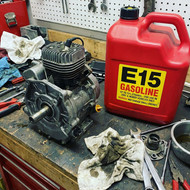
E15 Fuel Damage in Small Engines | Unleaded 88 Warning | Attention US Customers
Published by Get Her Going Engineers on 19th Jun 2026
E15 Fuel Damage in Small Engines (Unleaded 88 Warning for US Equipment Owners)
Published for equipment owners across the United States
Short Answer: No. E15 gasoline (often labeled Unleaded 88) is NOT safe for pressure washers, log splitters, plate compactors, trenchers, portable generators, or most small engines. It can cause carburetor corrosion, fuel system damage, hard starting, and engine failure. Use ethanol‑free gasoline (E0) or E10 gasoline only.
⚠️ Fuel Safety Warning
Gasoline is highly flammable. Always refuel outdoors. Never refuel a hot or running engine. Store fuel in approved containers only. Never operate small engine equipment indoors — carbon monoxide can be fatal.
What Is E15 Gasoline?
E15 gasoline contains 15% ethanol. It is commonly marketed as Unleaded 88 due to its octane rating.
- E0 — 0% ethanol (best choice)
- E10 — 10% ethanol (maximum recommended)
- E15 — 15% ethanol (NOT safe for small engines)
- E85 — 85% ethanol (flex-fuel vehicles only)
Many US fuel pumps emphasize “88 Octane” instead of ethanol percentage, leading equipment owners to accidentally select E15.
Is Unleaded 88 Safe for Small Engines?
No. Most manufacturers approve a maximum of 10% ethanol.
Never use E15 in:
- Pressure washers
- Log splitters
- Plate compactors
- Trenchers
- Portable generators
- Lawn mowers
- Construction small engines
Why E15 Causes Small Engine Damage
1️⃣ Phase Separation
Ethanol absorbs moisture. This leads to phase separation, where water separates from fuel and settles in the carburetor, causing corrosion and hard starting.
2️⃣ Carburetor Corrosion
E15 fuel damage often appears as clogged jets, surging, and engines that only run on choke.
3️⃣ Fuel Line & Seal Deterioration
Ethanol breaks down rubber components, causing leaks and debris contamination.
4️⃣ Lean Running & Overheating
Higher ethanol blends reduce energy content, increasing heat and long‑term wear.
Signs You Used the Wrong Fuel
- Engine won’t start after refueling
- Surging or hunting RPM
- Only runs on choke
- Fuel leaking from carburetor
- Strong fuel smell
- Loss of power under load
Stop running the machine immediately to prevent further damage.
✅ Get FREE small engine repair advice from Get Her Going.
Best Fuel for Small Engines in the United States
✅ Ethanol-Free Gasoline (E0)
- No moisture absorption
- No phase separation
- Best long-term protection
✅ E10 Gasoline (Maximum 10%)
- Use fresh fuel
- Add stabilizer if storing
- Do not store untreated fuel over 30 days
❌ Never Use
- E15
- Unleaded 88
- E85
What To Do If You Accidentally Used E15
- Stop running the equipment
- Drain the fuel tank
- Drain the carburetor bowl
- Refill with fresh E0 or E10
- Inspect fuel lines & carburetor
Not sure how? Contact Get Her Going for FREE diagnosis and step‑by‑step help.
We Stock Parts For:
- Pressure washers
- Log splitters
- Plate compactors
- Trenchers
- Portable generators
- Honda GX‑style engines
- 168F, 170F, 188F, 190F engines
Common replacement parts for fuel damage include:
- Carburetors
- Fuel lines
- Fuel filters
- Spark plugs
- Gaskets & seals
Frequently Asked Questions
Can you use E15 in small engines?
No. E15 contains 15% ethanol and is not approved for small engine machinery.
Is Unleaded 88 the same as E15?
Yes. Unleaded 88 is a marketing name for E15 gasoline.
Will one tank of E15 ruin my engine?
Not always — but it can cause carburetor damage quickly.
Where can I get help?
Get Her Going offers FREE troubleshooting support across the USA.
Final Advice for US Equipment Owners
- ✅ Use E0 whenever possible
- ✅ E10 is acceptable
- ❌ Never use E15
Contact Get Her Going Today for FREE Expert Advice.
Keeping America’s Small Engines Running.


